
Axiom Space and Kepler Advance Distributed Orbital Computing Infrastructure
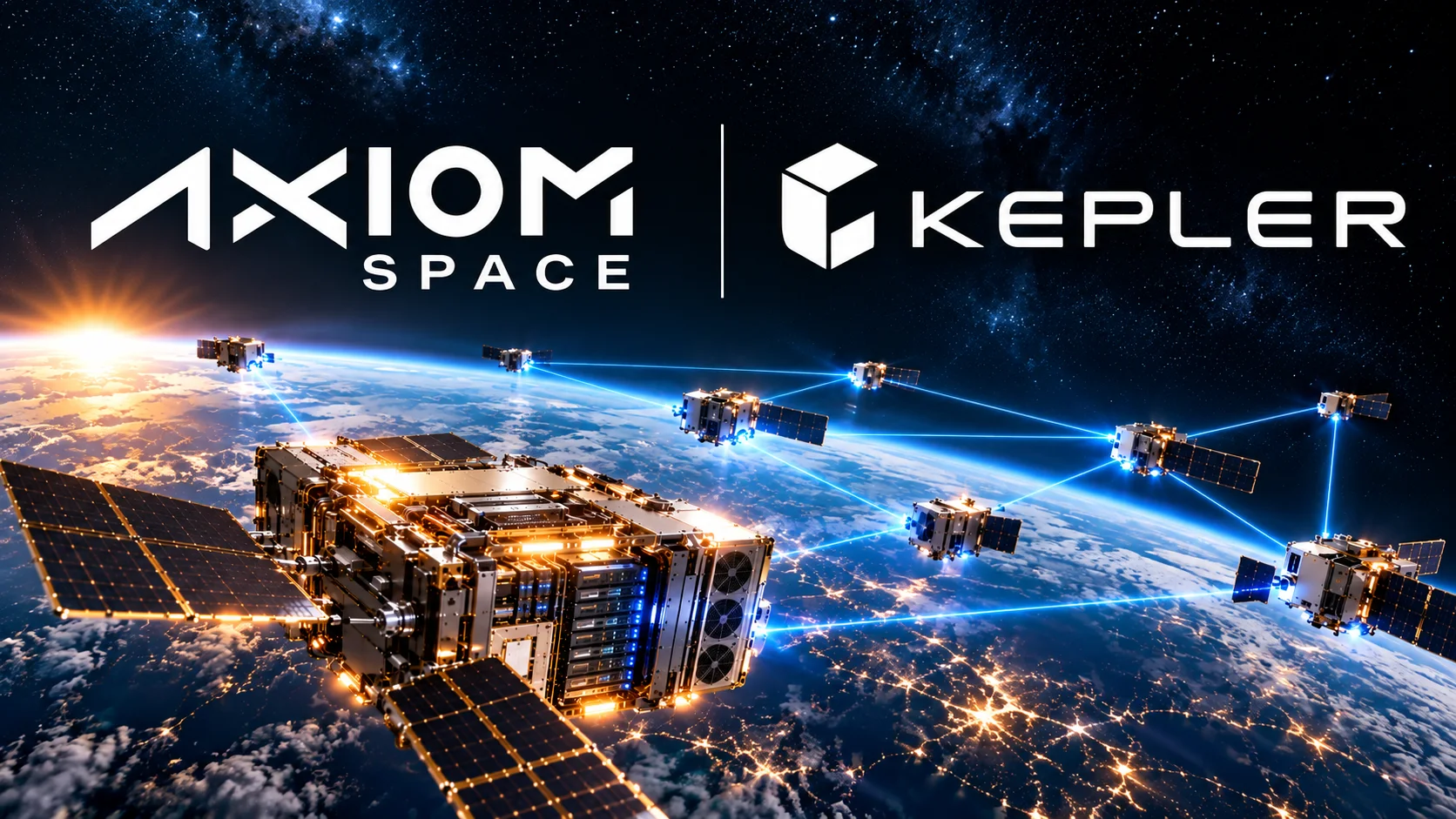
Axiom Space Advances Orbital Compute Network
Axiom Space has announced new progress on its Axiom Resilient Compute (ARC) platform, bringing the company closer to its goal of building distributed computing infrastructure in low Earth orbit.
The update, announced October 6, confirms that two ARC nodes are currently operational in orbit. The nodes were launched earlier this year as part of Kepler Communications' optical data relay constellation and are designed to support distributed workloads, AI and machine learning processing, and secure communications in space.
Axiom and Kepler have also confirmed ARC-to-ARC and ARC-to-ground communications, demonstrating that the orbital compute nodes can communicate across the network and with terrestrial infrastructure.
Computing Data Closer to Where It Is Generated
The ARC platform is designed around the idea of processing data in space instead of sending every piece of raw information back to Earth. Satellites can generate large volumes of imagery, sensor information and operational data that may exceed available communications capacity.
By processing information closer to its source, orbital computing could reduce the amount of data that needs to be transmitted to ground stations while enabling faster analysis and decision-making. Axiom is developing the system for AI/ML workloads as well as other space-based processing applications.
Kepler's optical relay network provides the connectivity layer for the ARC nodes. The companies have been working together since 2023 on optical inter-satellite links, with the current infrastructure supporting 2.5 Gbps-capable optical connections compatible with Space Development Agency Tranche 1 standards.
Post-Quantum Security Moves Into Focus
Security is another major component of the programme. Axiom has completed a ground-based demonstration in which a workload encrypted using post-quantum cryptography was successfully migrated.
The test is an early validation of the company's approach to protecting computing workloads against future quantum-enabled attacks. However, the demonstration has so far been conducted on the ground; Axiom's next milestone is to demonstrate the post-quantum capability directly in orbit.
The company says its PQC protection is incorporated at both the silicon and software layers. This is intended to help secure data and workloads even as organisations prepare for the possibility that future quantum computers could undermine some currently used cryptographic systems.
From Orbital Nodes to Space-Based Cloud Infrastructure
The current ARC infrastructure forms part of Axiom's broader orbital data center strategy. The company previously deployed its first two dedicated orbital data center nodes into low Earth orbit aboard Kepler's optical relay network, laying the groundwork for cloud-style computing and data processing in space.
Axiom ultimately plans to expand the network from its current prototype infrastructure into a larger orbital processing system. The company sees potential applications across satellite operations, national security, AI/ML processing and other workloads where connectivity to terrestrial infrastructure may be limited or interrupted.
For Kepler, the collaboration adds computing to its optical communications infrastructure. Its existing network already supports distributed on-orbit computing powered by NVIDIA Jetson Orin modules, allowing workloads to be processed across interconnected satellites.
Building a Distributed Computing Layer in Space
The latest milestones do not represent a fully operational orbital data center network at global scale. Instead, they demonstrate that key pieces of the architecture — orbital compute nodes, optical networking and secure workload processing — can operate together.
Axiom's next step is to validate post-quantum cryptography in orbit and then expand the ARC network. If that progression succeeds, the company aims to create a distributed computing layer capable of processing and securing data closer to where it is generated, while reducing dependence on continuous connections to Earth.