ByteDance Prepares Muse-Like AI Assistant to Challenge OpenAI and Anthropic
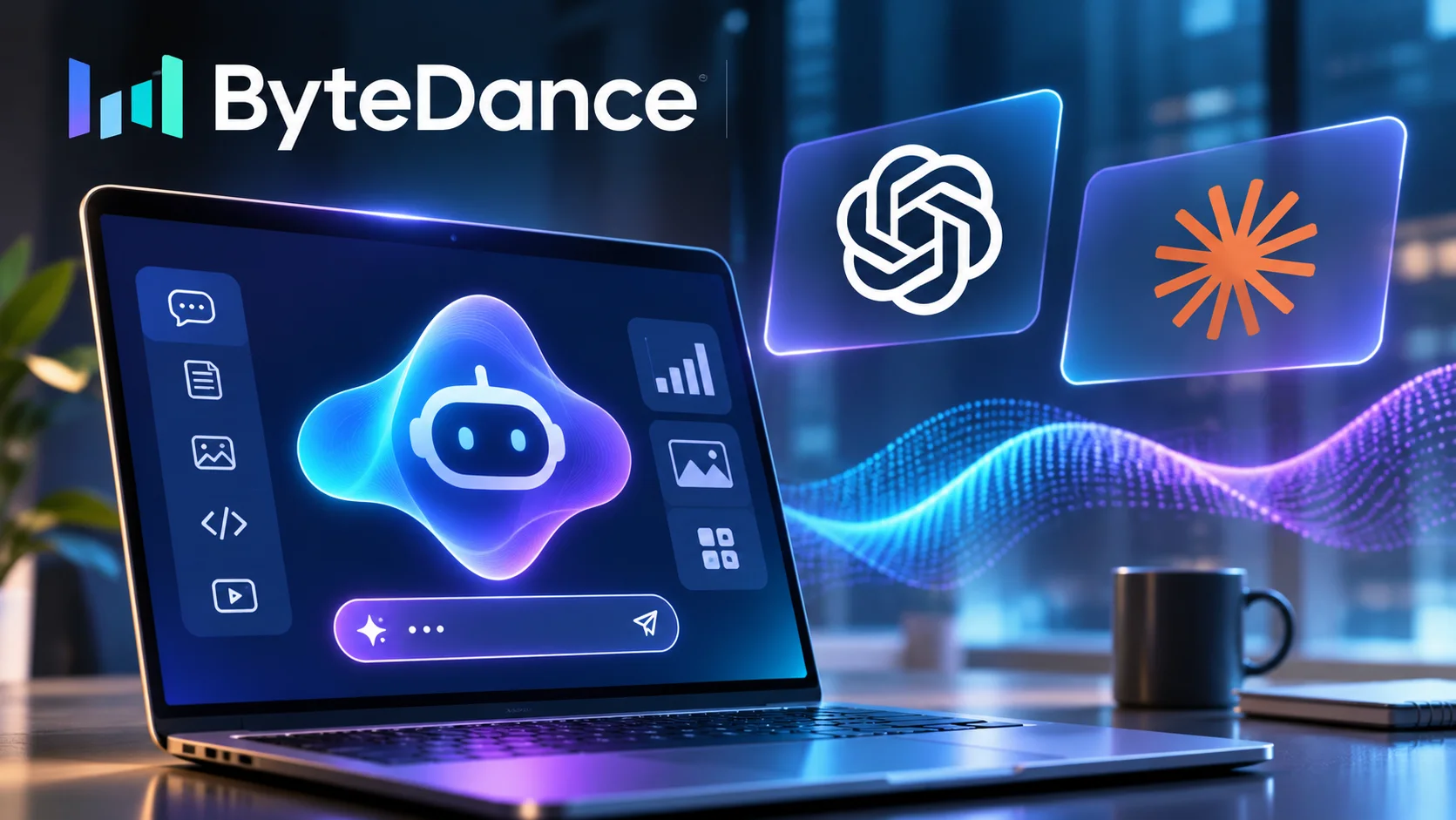
ByteDance is preparing to launch a new ByteDance AI assistant in the coming weeks, marking a broader push to compete with leading artificial intelligence companies beyond its established strength in video generation. The planned product is expected to resemble Meta’s Muse, according to a Bloomberg report published on November 11 and carried by The Japan Times the following day.
The assistant’s name, launch date and full feature set have not been disclosed. Bloomberg reported that the product is intended to build on ByteDance’s AI video capabilities. It is not yet clear whether the company plans to pair the assistant with dedicated hardware or how widely it will be made available.
Zhang Yiming Sets a Longer-Term AI Target
ByteDance co-founder Zhang Yiming reportedly outlined the company’s ambitions during a recent all-hands meeting with its AI team. He said the company could compete with OpenAI and Anthropic at the frontier of AI development, but that reaching this level could take until 2029 or 2030.
The timeline puts the planned assistant launch in perspective. Releasing a new consumer-facing AI product in the coming weeks is a nearer-term move; matching the research capabilities of leading AI laboratories is a much longer challenge.
Bloomberg’s report, citing people familiar with the private meeting, said Zhang identified data as a major concern. ByteDance’s Seed large language models are trained on datasets far smaller than those used by frontier competitors, he reportedly told staff.
ByteDance AI Assistant Could Build on Its Video AI Strength
ByteDance already has a significant presence in consumer AI through Doubao, its ChatGPT-style chatbot, and Seedance, its video-generation model family. Its strength in video gives the company a potential foundation for an assistant that can connect different AI capabilities in one product.
However, success in video generation does not automatically translate into leadership in general-purpose AI. An assistant must understand requests, respond reliably and help users complete tasks across different contexts. The details of ByteDance’s planned product will determine how far it goes beyond a familiar chatbot experience.
The company’s Seed team works across language, image and video models, as well as areas such as robotics and hardware-related AI. Bloomberg reported that the group has around 1,000 researchers and engineers and is led by Wu Yonghui, who joined from Google DeepMind in 2025.
The Race With US AI Labs Remains a Longer Contest
Zhang has reportedly urged the team to prioritise original research rather than rely on distillation, a method that uses the outputs of a more powerful model to train or improve another model. That approach could mean slower short-term progress, but reflects a focus on developing the company’s own capabilities.
For ByteDance, the proposed AI assistant is therefore more than another product launch. It could bring the company’s existing AI work closer to everyday users while testing whether its strengths in video, language models and consumer platforms can be combined into a competitive assistant.
Important details remain unknown, including the product’s capabilities, availability and any hardware plans. Until ByteDance makes an announcement, the launch timeline and product direction should be treated as reported plans rather than confirmed specifications.