China Humanoid Robots: Beijing Pushes to Bring Machines Into Homes
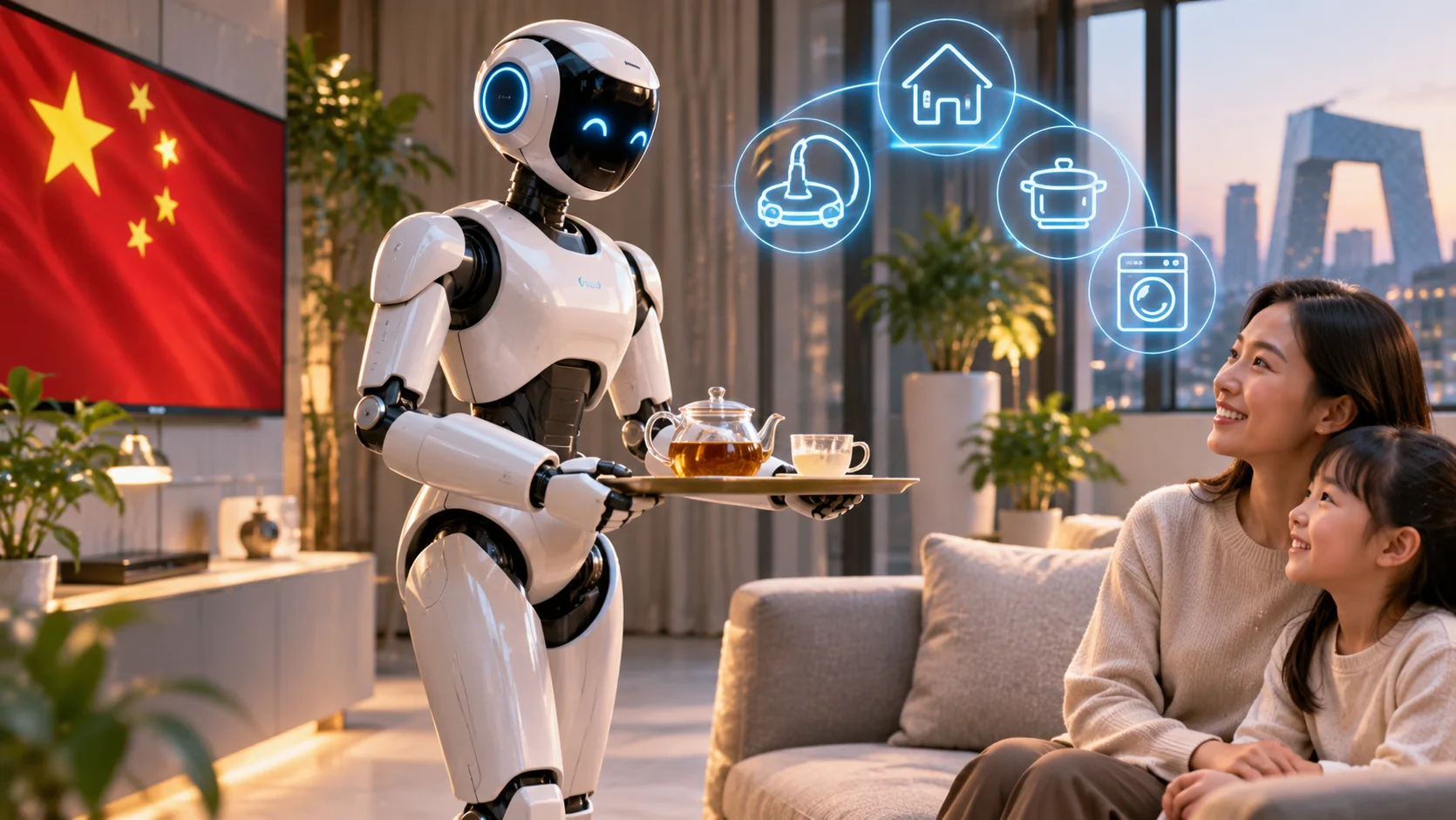
China is accelerating efforts to develop humanoid robots that can eventually assist people with everyday activities, extending the country's robotics ambitions beyond factories and research facilities. Developers are training machines to handle objects, reproduce human movements and perform practical tasks in environments designed for people.
At the Hubei Humanoid Robotics Innovation Center in Wuhan, engineering graduates are helping build the training data needed to teach robots these skills. Their work involves repeatedly performing ordinary actions while cameras and motion sensors record their movements. The collected information is then used to train robotic systems.
China Humanoid Robots Learn Through Repeated Human Actions
The training process involves tasks that appear simple but require considerable precision. In one demonstration, graduates were seen pouring water into a jug, arranging cutlery and chopsticks, and opening a flashlight to remove and replace its battery.
Workers perform these movements repeatedly so that the robots can learn how to reproduce them. Some tasks require hundreds or even thousands of repetitions to collect enough training data.
The centre is also using motion-capture equipment to transfer human movements to humanoid machines. In one example, a robot mimicked an operator's hand movements while learning how to pour water into a cup.
This approach highlights an important part of humanoid development: teaching robots to interact with physical objects, rather than simply making them walk, dance or respond to commands.
Why China Wants Robots in Everyday Life
China's push is connected to wider economic and demographic pressures. The country is facing an ageing and shrinking population, increasing interest in technologies that could support labour-intensive industries and services.
Robotics developers see potential applications across manufacturing, logistics, retail and healthcare. Household assistance is another long-term target, particularly for tasks that require physical effort or regular human attention.
Professor Jiyin Cao, who leads the Hubei robotics centre, told CBS News that the goal is to develop machines that can serve people in both industrial and household settings.
China is also seeking a stronger position in the global robotics market. Its established manufacturing base and supply chains give domestic developers an advantage in producing components and scaling hardware development.
Household Deployment Remains a Major Challenge
Despite the progress, humanoid robots are not yet ready to manage most household responsibilities independently. Homes are unpredictable environments, with different layouts, furniture, objects and people moving around throughout the day.
A robot trained to perform a task in a controlled facility may struggle when it encounters an unfamiliar object or an unexpected obstacle. It must recognise its surroundings, adjust its movements and handle objects without causing damage or putting people at risk.
Cao told CBS News that household deployment could still be three to five years away, although it might take as long as a decade. The timeline depends on how quickly developers improve training, learning and the machines' ability to operate in less structured environments.
The Next Test for Humanoid Robotics
China's expanding efforts show how the humanoid robotics industry is moving towards practical applications. Demonstrations of walking, dancing and lifting objects can attract attention, but the ability to complete ordinary tasks consistently will determine whether these machines become useful products.
For developers, the challenge is no longer limited to building robots that resemble humans. They must create systems capable of understanding and responding to the complexity of human environments.
Whether China can bring reliable humanoid assistants into homes will depend on turning repeated training exercises into safe, adaptable and independent performance.