Ford CATL Battery Technology Enters US Production With First Cell Shipments
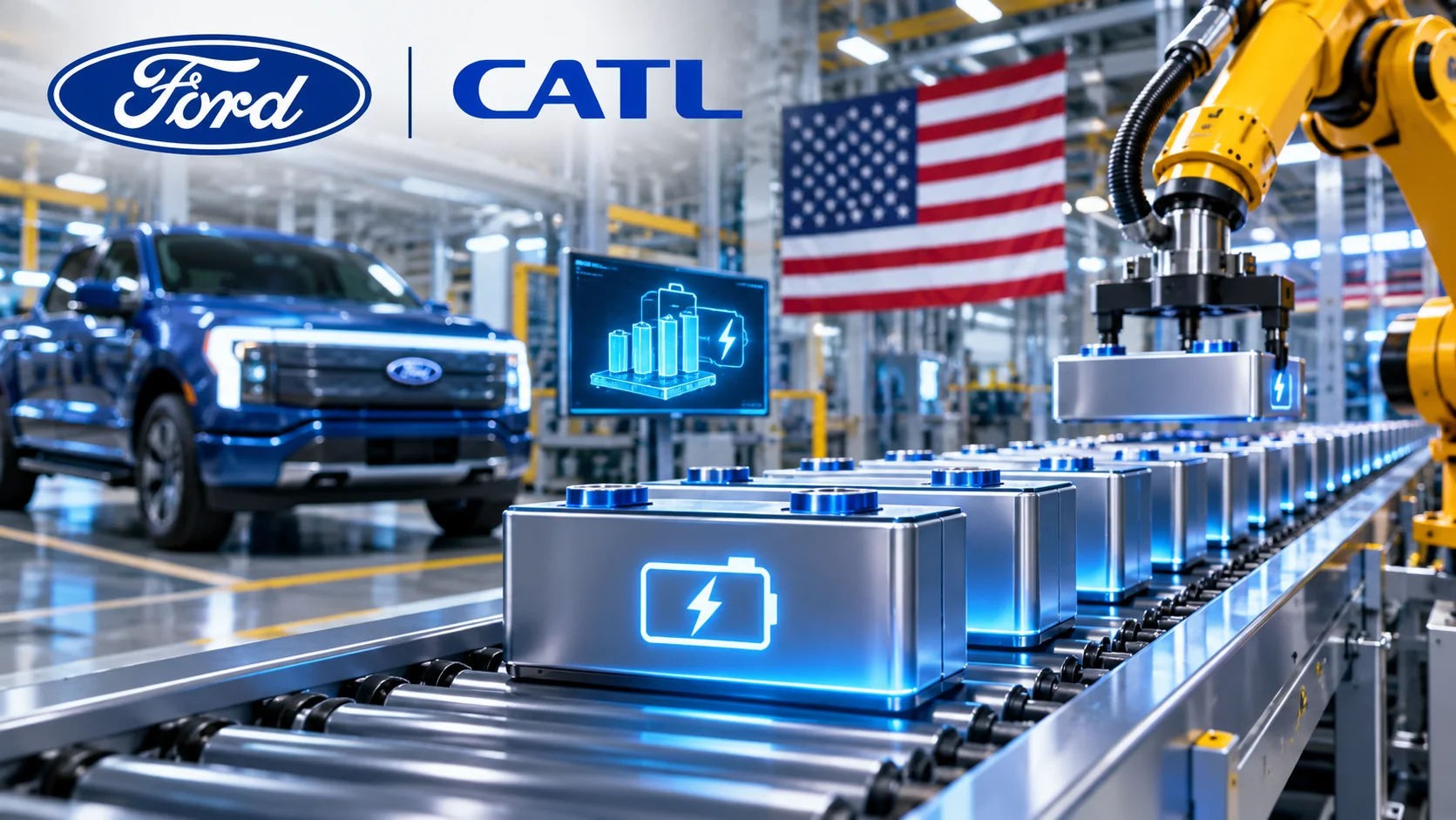
Ford has started shipping its first battery cells manufactured using technology licensed from Chinese battery maker Contemporary Amperex Technology Co. Limited (CATL). The development marks a major step in the automaker's effort to establish domestic electric vehicle battery production while using manufacturing expertise developed by one of the world's largest battery companies.
The cells are being produced at Ford's BlueOval Battery Park Michigan facility in Marshall, Michigan. The Ford CATL battery technology arrangement combines American-owned manufacturing infrastructure with licensed Chinese production processes. The first shipments are heading to Ford's Louisville, Kentucky, facility for prototypes of its upcoming Fathom midsize electric pickup.
The milestone comes amid wider trade tensions between the United States and China. It also highlights how automakers are using technology licensing to accelerate domestic manufacturing and reduce their dependence on imported battery products.
Ford CATL Battery Technology Powers New LFP Production
The Michigan facility produces lithium iron phosphate (LFP) battery cells with a prismatic design. LFP technology is gaining attention across the electric vehicle industry because it generally costs less than nickel-based battery chemistries and offers strong durability.
Unlike nickel-based alternatives, LFP batteries do not require nickel or cobalt as active cathode materials. This can help manufacturers reduce material costs and develop more affordable electric vehicles.
Ford owns the Michigan battery facility, while CATL provides the licensed technology and manufacturing expertise. The arrangement allows Ford to develop its domestic production capabilities without building the entire manufacturing process independently.
The company expects the battery facility to reach a production capability of 40 cells per minute. The first shipments will support prototype development rather than immediate mass-market vehicle deliveries.
Fathom Electric Pickup to Use Michigan-Made Battery Cells
Ford plans to use the new battery cells in its upcoming Fathom midsize electric pickup. The initial shipments are being sent to its Louisville facility for prototype vehicles.
The project forms part of Ford's broader effort to develop more affordable electric vehicles and strengthen its domestic battery supply chain.
Access to LFP technology is particularly important for automakers seeking to reduce production costs. Battery prices remain a major factor in determining the affordability of electric vehicles.
By manufacturing cells in Michigan, Ford can also build experience in battery production, quality control and industrial operations. The company expects the facility to support its longer-term battery manufacturing plans.
CATL Partnership Faces Political Scrutiny in the US
Despite the manufacturing progress, Ford's partnership with CATL has attracted criticism from American officials and lawmakers concerned about Chinese involvement in domestic industries.
US Transportation Secretary Sean Duffy previously expressed concern about Ford's reliance on licensed CATL technology at the Michigan facility. The arrangement has become part of a wider debate about national security, foreign technology and the future of American battery manufacturing.
Ford has defended the project, arguing that developing domestic production capabilities is preferable to continuing to import batteries from China. The company has also maintained that it expects the facility to qualify for federal battery manufacturing tax credits.
The development demonstrates the complicated relationship between domestic manufacturing ambitions and global technology partnerships. Ford is building its own battery production capacity, but its manufacturing process still depends on expertise licensed from a Chinese company.
The first shipments represent a practical step towards Ford's electric vehicle production goals. However, the longer-term success of the project will depend on manufacturing efficiency, battery costs and the company's ability to scale domestic production amid continuing geopolitical tensions.