
Fujitsu’s Monaka Server Chips Draw Strong Demand as Buyers Seek Alternatives to US and Chinese Suppliers
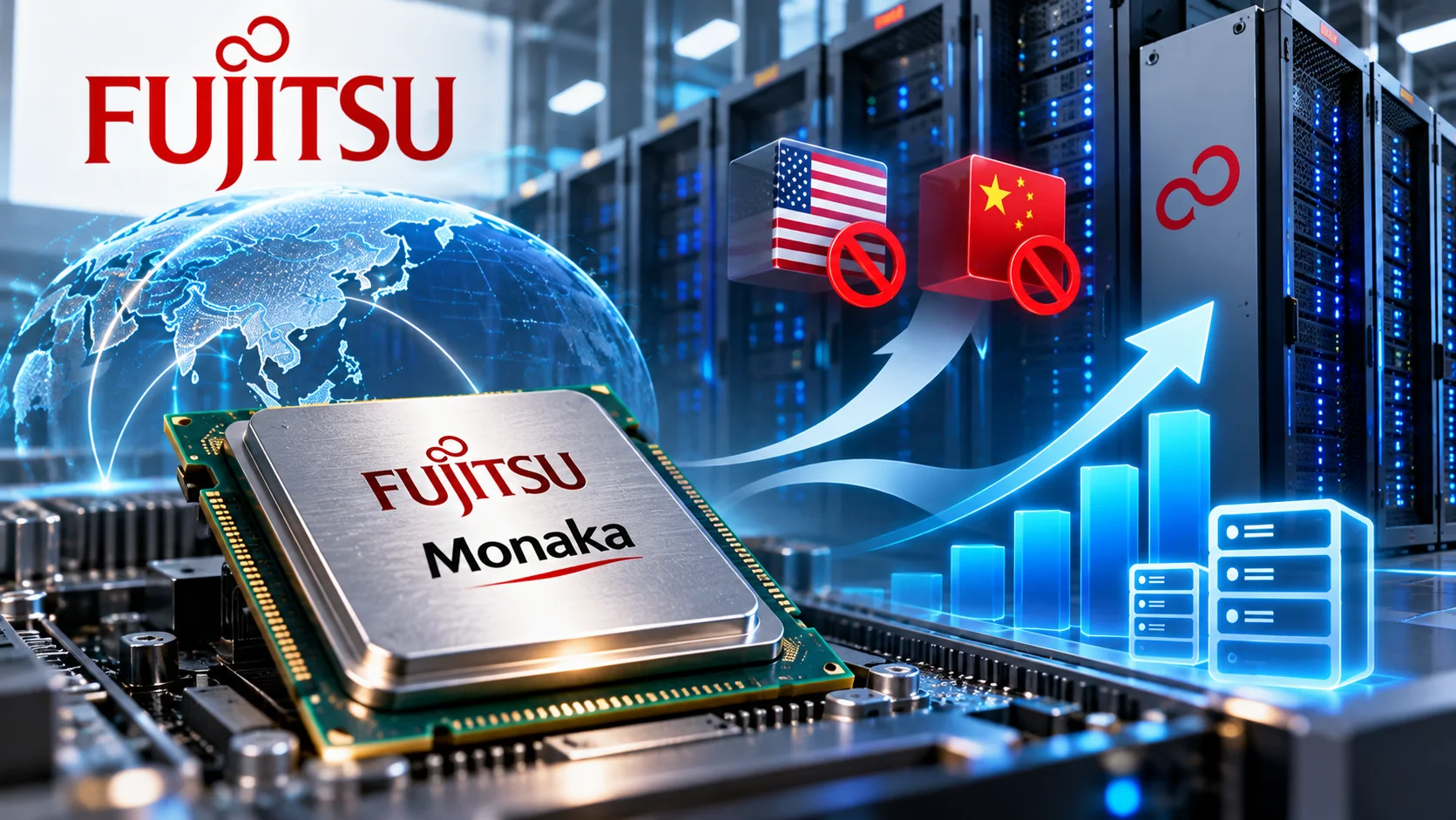
Fujitsu is seeing stronger-than-expected initial demand for its Monaka server processors, as businesses and governments look for alternatives to US and Chinese chip suppliers. The Japanese technology company has already begun discussing production capacity with Taiwan Semiconductor Manufacturing Company (TSMC), its manufacturing partner, after starting commercial sales this month.
Vivek Mahajan, Fujitsu’s chief technology officer, told Bloomberg that customers in Japan, the United States and Europe are showing interest in the processors. Demand is being driven partly by requirements for data security and greater control over computing infrastructure in sectors including defence, finance, manufacturing and public services.
Most of the 45 companies that received Monaka samples in August are expected to place orders, Mahajan said. Fujitsu currently estimates sales of around 500,000 processors over two years, although stronger demand could put pressure on available production capacity.
Fujitsu Monaka chips target the server market
The Fujitsu Monaka chips use Arm architecture and are built around a 2-nanometre manufacturing process for their processor cores, alongside 5nm technology for the cache and input/output sections. The design is intended to deliver high computing performance while improving energy efficiency and memory access.
Fujitsu has traditionally used its processors mainly in its own systems, including the Fugaku supercomputer. With Monaka, the company is expanding beyond that model by offering the chips to cloud and data centre operators as well as other server manufacturers.
The company announced the processor and its accompanying server platform in September, with commercial availability scheduled to begin in November. The product is designed for workloads that include AI inference and general-purpose computing.
Fujitsu is positioning the system as an option for organisations that want greater control over where their data is processed and how their infrastructure is supplied. Its Japan-developed and manufactured server platform is intended to support those requirements through domestic production and supply-chain traceability.
Production capacity becomes a key concern
The early response has raised questions about whether Fujitsu can manufacture enough processors if orders grow beyond its current expectations. Mahajan said a single manufacturer operating around 30,000 servers could require more than 200,000 Monaka chips.
Fujitsu expects the processors to generate ¥35 billion (approximately $220 million) in sales in the next fiscal year. It has set a longer-term annual sales target of ¥500 billion by 2035, although Mahajan indicated that the company could reach that figure earlier.
The discussions with TSMC are therefore important to Fujitsu's plans to scale the business. The company needs sufficient manufacturing capacity to serve customers while establishing Monaka as a product line beyond its own server systems.
AI infrastructure expands the market for server CPUs
The growing use of AI agents is increasing demand for computing resources beyond specialised AI accelerators. Data centres also need central processing units to manage routine operations, data movement and general-purpose workloads.
Intel and AMD remain major players in the server CPU market, while Arm-based processors and Nvidia's offerings are adding competitive pressure. Fujitsu is entering this market with a processor designed around energy efficiency, performance and data sovereignty.
Its early customer interest suggests that some organisations are considering alternatives to established suppliers as they expand AI infrastructure. Whether that interest translates into large-scale orders will depend partly on production capacity, pricing and the performance of Monaka in customer deployments.