
Neuralink Trial Participant Plays GTA 6 Using Brain Implant
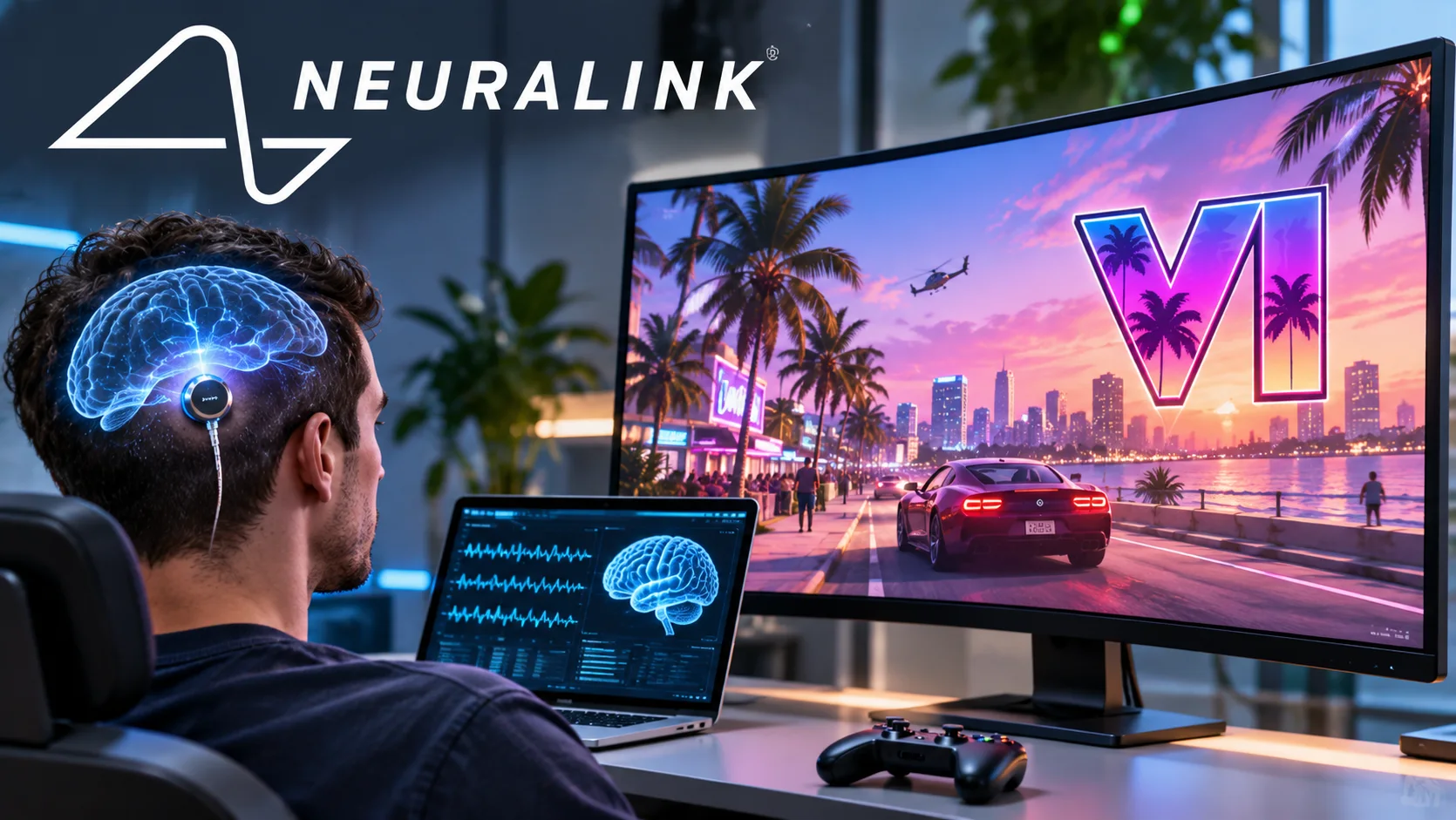
A participant in Neuralink's clinical trials has demonstrated playing Grand Theft Auto 6 using a brain-computer interface, translating imagined finger and hand movements into commands for the game. The demonstration shows how the company's implant can extend computer control beyond basic cursor movements to more complex gaming interactions.
Neuralink shared a video of the unnamed participant on 20 November 2026. The footage shows him controlling different activities in GTA 6, including driving, flying an aircraft and fighting in the game, without physically operating a conventional controller.
The demonstration uses Neuralink's Telepathy brain-computer interface (BCI), which interprets neural activity associated with intended movements and converts it into digital inputs.
How the Neuralink Brain Implant Controls GTA 6
The participant explains that the system maps imagined movements to specific PlayStation 5 controller inputs. Thinking about tapping his ring finger activates the square button, while imagining sliding his right hand forward moves the aircraft's nose upwards.
The team has also mapped another control to his foot, expanding the number of commands he can operate through the implant.
The video includes a live neural decoding display alongside a graphic of a game controller. Its inputs light up as the system registers commands, offering a visible demonstration of how intended movements are translated into gameplay.
The participant does not need to physically press the controller buttons. Instead, the system interprets the signals associated with his imagined actions and converts them into commands the game can recognise.
Implant Replaces Earlier Mouth-Stick Controls
The participant also described how the implant has changed his ability to use computers and play games.
Before receiving the device, he relied on a mouth stick and an iPad to interact with digital applications. He said the method restricted the number of games he could play and caused soreness in his jaw.
With the implant, he can control a computer through intended movements rather than relying on repeated physical contact with a touchscreen or mouth-operated device.
Neuralink's demonstration follows earlier examples of trial participants using brain-computer interfaces for gaming. The company's first human implant recipient demonstrated playing chess and Civilization VI in 2024. Other participants have subsequently shown the ability to play titles including Counter-Strike 2 and World of Warcraft.
Neuralink Technology Remains Experimental
The GTA 6 demonstration is a notable example of how brain-computer interfaces could improve digital access for people with paralysis or severe mobility limitations. Gaming requires multiple inputs and continuous interaction, making it a more demanding demonstration than basic cursor control.
However, the footage does not establish that the technology is ready for widespread consumer use. Neuralink has stated that its devices remain investigational and have not been approved by the US Food and Drug Administration or other regulatory authorities.
The company has also cautioned that experiences shared by voluntary clinical-trial participants may not represent the results other participants or future users will achieve.
Neuralink's immediate focus remains on developing assistive technology that allows people with limited mobility to interact with computers and other devices. The GTA 6 demonstration provides another example of that potential, but broader availability will depend on clinical progress, safety assessments and regulatory approval.