Google Unveils Gemini 4 Argon, Its Most Advanced AI Model for Complex Workflows
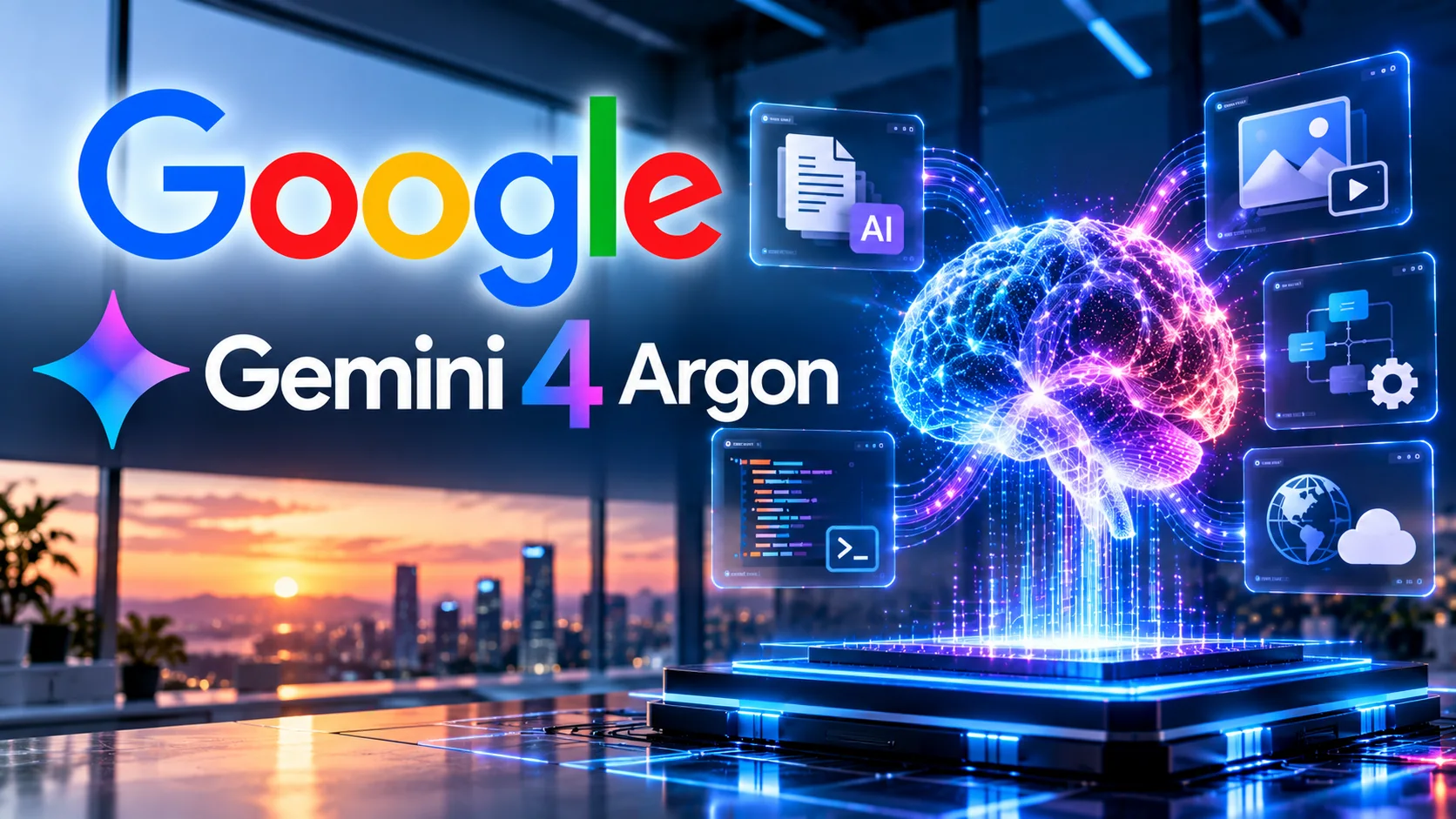
Google has unveiled Gemini 4 Argon, the first model in its Gemini 4 generation, positioning it as a frontier AI system for complex, long-running tasks across software engineering, enterprise knowledge work and cybersecurity. Google says Argon is designed to reason through multi-step workflows rather than simply respond to individual prompts.
The launch comes after delays to Google’s AI roadmap and as the company competes with frontier models from OpenAI and Anthropic. Google is initially taking a controlled approach to Argon because of the model’s advanced cybersecurity capabilities.
Gemini 4 Argon Targets Long-Running AI Work
Argon is designed for tasks that can require extended reasoning and multiple stages of execution. Google is targeting applications including software development, enterprise research, legal and financial workflows, and cybersecurity defence.
Google says the model is already being used internally for work such as code migration and data-centre optimisation. The company is positioning this ability to sustain complex workflows as a key difference from AI systems primarily designed around shorter interactions.
Model Offers Up to 1 Million Output Tokens
One of Argon’s headline capabilities is its ability to generate up to 1 million output tokens, allowing it to produce substantially longer responses and work products in a single task.
The large output capacity is aimed at workloads involving extensive code, documents and multi-stage reasoning. It builds on Google’s broader work with long-context AI, although output capacity and context capacity are separate technical measures.
Cybersecurity Gets Controlled Early Access
Google is initially providing Argon to a limited group of trusted cyber defenders through its Fairwind Program rather than releasing it broadly to consumers and developers. The programme is designed to allow security organisations to use advanced AI capabilities while giving Google and its partners an opportunity to assess potential risks.
The controlled rollout is particularly relevant because Argon is designed for advanced cybersecurity work. Google says the model can assist with complex defensive workflows, while its safeguards are intended to reduce the risk of misuse.
Google Competes With OpenAI and Anthropic
Google is presenting Argon as a competitor to the latest frontier systems from OpenAI and Anthropic. Company testing indicates that Argon performs competitively on selected coding, cybersecurity and knowledge-work benchmarks, although results vary across individual tasks. Reuters reported that Argon outperformed some rival models on cybersecurity tests while trailing on certain coding evaluations.
The benchmark results therefore do not establish a universal lead across all AI workloads. Instead, Google is focusing Argon on areas where sustained reasoning and complex task execution can provide practical value for businesses and technical teams.
Wider Release Has No Fixed Date
Google has not provided a fixed public release date for broader developer and consumer access. The initial Fairwind rollout gives selected organisations access while Google continues evaluating the model's capabilities and safety controls.
Argon represents Google's next step toward AI systems that can handle longer, more complicated workflows with less step-by-step human intervention. Its eventual wider availability will depend on Google's rollout and safety testing.