
Kawasaki Heavy Industries Unveils Dog-Shaped Robot for Elderly Care
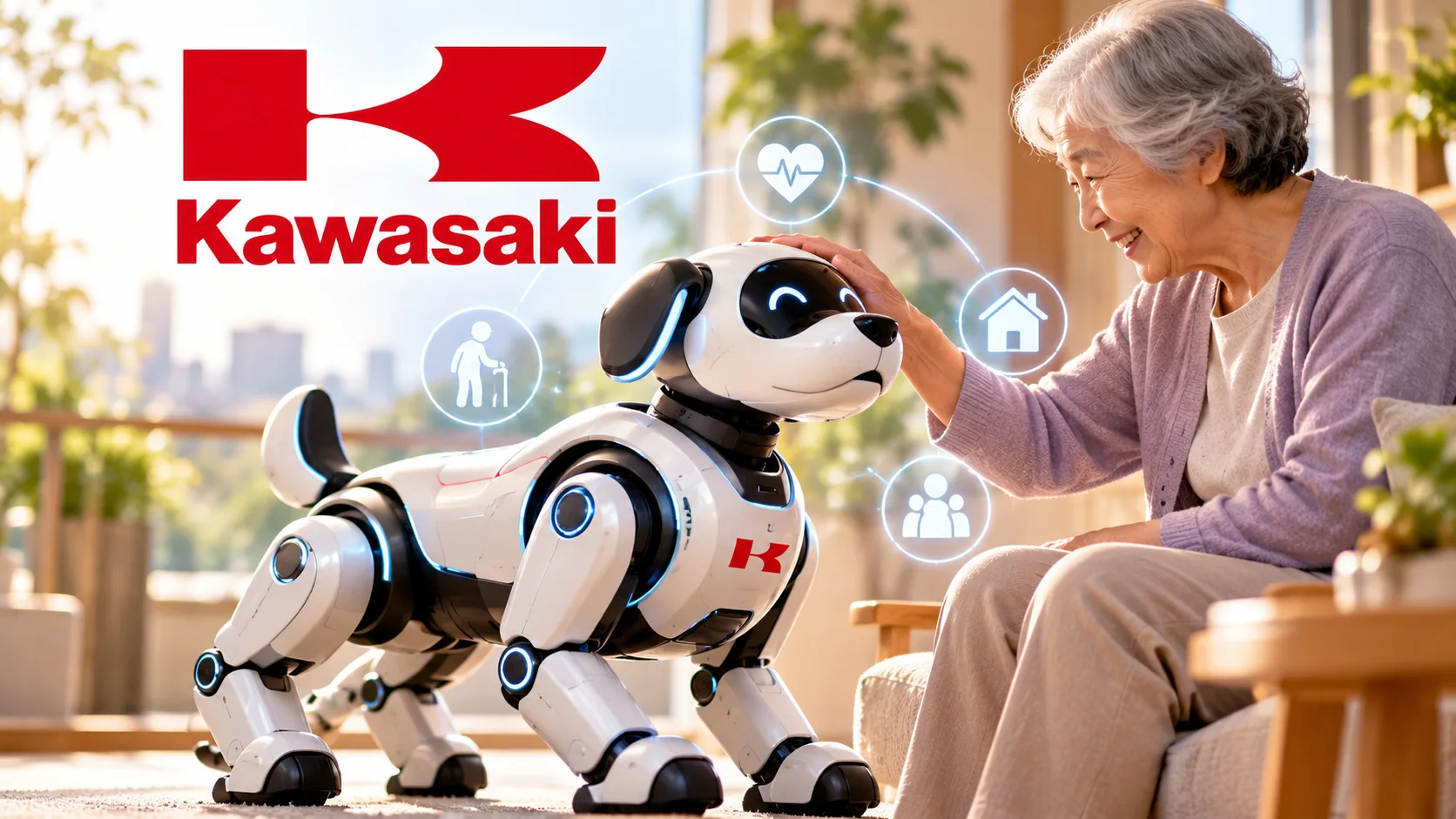
Kawasaki Heavy Industries has unveiled a prototype of Home LEO, a dog-shaped social robot designed to support elderly people living independently at home.
The robot uses physical AI to recognise its surroundings, assess situations and act autonomously. Kawasaki says Home LEO is designed to stay close to its user, providing conversation, monitoring and assistance with everyday activities. The company presented the prototype at a business briefing in Tokyo on October 6.
The project is aimed at Japan's growing elderly population and the shortage of healthcare and care workers. Kawasaki plans to conduct demonstration trials with government bodies, healthcare and nursing-care organisations and AI companies, with a target of launching Home LEO in fiscal 2028.
Physical AI Brings More Autonomous Assistance
Home LEO is being developed to do more than provide companionship. Kawasaki says the robot can recognise people and its surroundings and autonomously move and act inside the home.
Planned capabilities include helping users move around the house, locating and bringing items, and detecting unusual situations such as falls, changes in physical condition, unattended fire hazards and visitors at the door. The robot can then alert the user and, where appropriate, coordinate with family members and care professionals.
The approach reflects Kawasaki's broader focus on physical AI, where robots combine sensing, decision-making and physical movement to operate in real-world environments.
Building a Connected Home Healthcare System
Kawasaki also wants Home LEO to become part of a wider healthcare platform connecting homes with medical and nursing-care services.
The robot is designed to continuously collect information such as conversations, daily routines and general wellness data in a secure environment. Kawasaki says such care data could be shared with medical institutions and care facilities with the user's consent and under appropriate information-management practices.
This could allow Home LEO to play a role beyond direct assistance, helping connect information from an elderly person's home with professionals supporting their care.
From Prototype to Future Deployment
Home LEO extends Kawasaki's healthcare robotics portfolio beyond hospitals and care facilities into the home. The company already develops systems including the hinotori surgical robot, FORRO indoor delivery robot and Nyokkey semi-humanoid robot.
For Home LEO, however, the technology remains at the prototype stage. Kawasaki plans further demonstrations and development before its targeted fiscal 2028 market launch, meaning the robot's effectiveness, safety and real-world usefulness still need to be established through testing.
The project nevertheless shows how Japan's ageing population is creating a new market for social robotics, with companies increasingly combining physical robots and AI to support independent living.