Matrix Robotics Demonstrates MATRIX-3 Humanoid Robot as an Autonomous Exhibition Guide
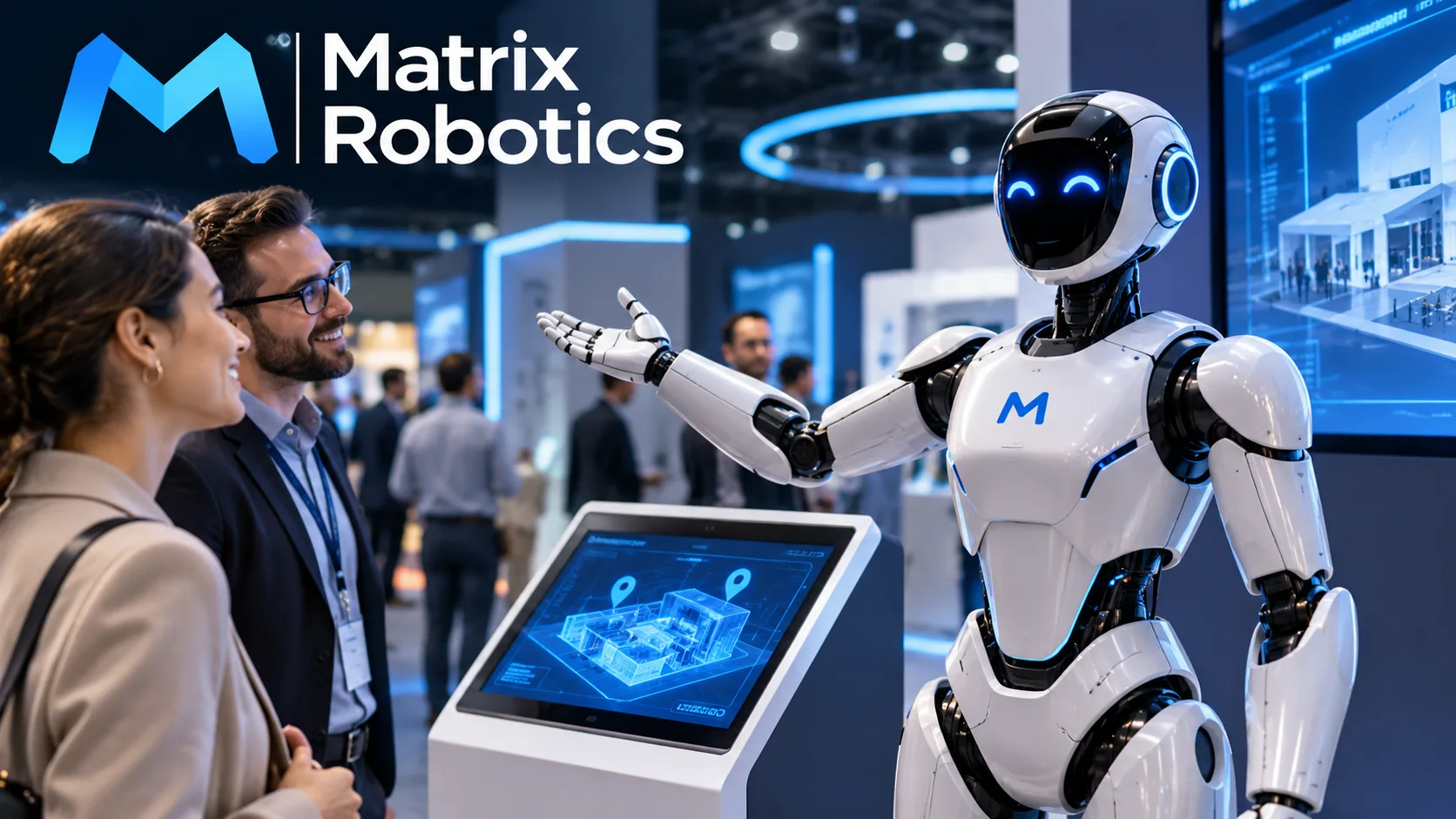
Matrix Robotics has demonstrated its MATRIX-3 humanoid robot in a public-facing service role at the China International Import Expo (CIIE) in Shanghai. The robot made its debut as an exhibition guide, interacting with visitors and retrieving information during the event.
The demonstration, announced on November 11, 2026, focused on how humanoid robots could support visitor services in crowded public environments. Matrix Robotics said MATRIX-3 operated without relying on fixed, line-by-line scripts, responding to visitors and selecting information based on the situation around it.
MATRIX-3 Humanoid Robot Moves Beyond Scripted Demonstrations
According to the company, the robot handled several parts of the guided-tour process autonomously. These included detecting visitors, switching between interaction modes, retrieving company information and responding to questions.
The exhibition presented a demanding environment, with high visitor traffic and background noise. Matrix Robotics said the robot could adjust its explanations to visitors' on-site presence rather than simply repeat a predetermined sequence.
This distinction is important for service applications. A robot operating as a guide needs to respond to changing questions and visitor behaviour, not just perform a rehearsed presentation. However, the company announcement does not provide independent performance measurements or details about how the system handled every interaction during the event.
WAVE Model Supports Interaction and Movement
Matrix Robotics said MATRIX-3 uses its in-house WAVE physical-world foundation model to coordinate perception, conversation and movement. The system follows a collaborative architecture that the company describes as a “brain-cerebellum” structure.
The WAVE model acts as the robot's cognitive system. It is responsible for interpreting the environment, understanding visitor intentions, retrieving information and planning dialogue. A separate motion-control model manages walking and gestures.
The company said feedback from real exhibition environments is also used to improve capabilities such as voice recognition in noisy spaces and avoiding moving crowds. This approach links the robot's performance in public settings with ongoing system development.
Dexterous Hands and Sensors Add to the Hardware
MATRIX-3 stands 1.70 metres tall and weighs 65 kilograms, according to the announcement. Its hardware includes a 27-degree-of-freedom rope-driven hand, with fingertip sensing accuracy reported at 0.1 newtons.
The hand combines flexible movement with tactile feedback. Although the expo demonstration centred on conversation and visitor guidance rather than industrial manipulation, these features point to the wider range of physical tasks the platform is designed to support.
What the Demonstration Means for Service Robotics
The CIIE appearance offers an example of humanoid robotics being tested in a public service setting rather than presented only through staged demonstrations. Exhibition guidance is a relatively visible application: robots must communicate, respond to people and operate around unpredictable movement.
The demonstration does not establish that MATRIX-3 is ready for widespread commercial deployment. Its capabilities and performance claims in the announcement come from Matrix Robotics, and further independent testing would be needed to assess reliability across different venues.
Still, the use case highlights a direction for the sector. As humanoid systems combine language models, environmental perception and motion control, public-facing roles such as information assistance and guided tours are becoming important areas of experimentation.