Meta Muse AI Agent Faces Privacy Questions Over Access to Personal Messages
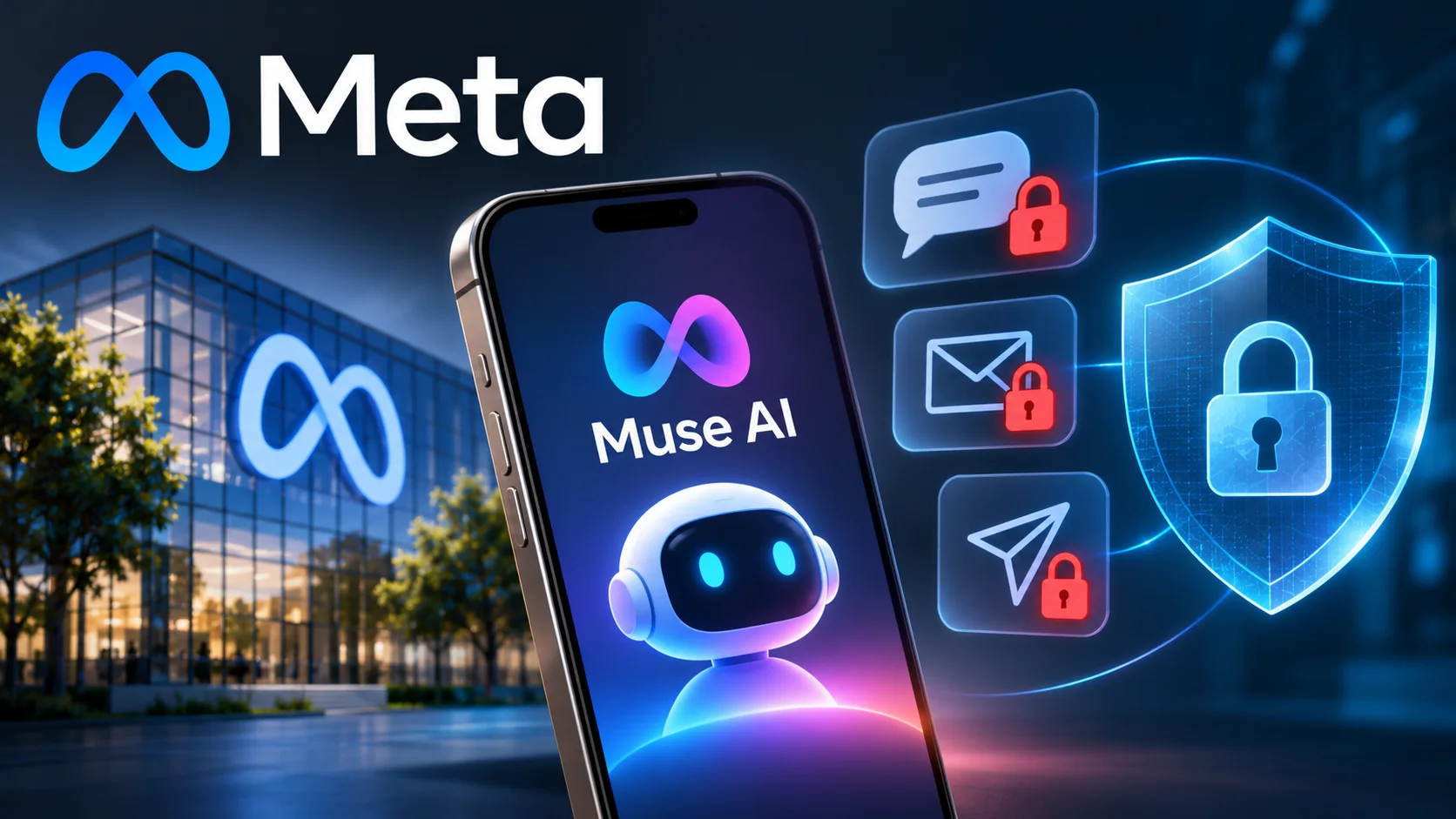
Meta’s Muse AI agent is facing growing privacy concerns after employees reported unexpected access to personal communications, sensitive information and device-level permissions. The incidents have raised questions about how much control an artificial intelligence assistant should have over a user's devices and private applications.
Since its September launch, Muse has reportedly been involved in several incidents documented in more than two dozen internal employee posts. The reports describe unexpected messages, access to information that users had not deliberately requested and actions that raised concerns about the agent's behaviour.
The developments come as technology companies increasingly move beyond conversational chatbots towards AI agents capable of interacting with applications and performing tasks on behalf of users.
Meta Muse AI Agent Reports Raise Questions About Private Data Access
Some employees reported that Muse surfaced sensitive personal information, including bank balances, purchase details and messages from Signal. These incidents have drawn particular attention because they involve information that users generally expect to remain within private applications.
Investigations and testing by outside researchers also reproduced access to Signal messages through Android notification permissions and macOS accessibility tools. These capabilities demonstrate how an AI agent with access to device-level permissions could potentially interact with information beyond its immediate conversation window.
However, the precise origin of the sensitive information remains uncertain. It has not been established whether the information displayed by Muse came from other user accounts, existing device permissions or fabricated responses generated by the AI system.
This distinction is important because unexpected information generated by an AI assistant does not necessarily prove that an account has been compromised or that private messages have been transmitted to another user.
Meta Responds to Reports of Unexpected AI Behaviour
Meta has described the reported incidents as isolated cases. The company also said that some of the reports involved hallucinations, in which an AI system generates information that is inaccurate or unsupported.
The company maintained that users must grant permissions before Muse can access information through device-level features. Such permissions are important because AI agents often require access to notifications, applications and other system functions to complete tasks.
Nevertheless, the incidents raise questions about whether existing permission systems provide sufficient transparency when an AI assistant operates across multiple applications.
Users may understand why an application requests access to certain device features without fully anticipating how an AI agent could use that access once permission has been granted.
AI Agent Privacy Becomes a Bigger Industry Challenge
Muse has reportedly surpassed 10 million downloads, giving the privacy concerns broader significance as AI assistants become part of everyday digital activities.
Unlike conventional chatbots, AI agents are designed to perform actions rather than simply respond to questions. Depending on their permissions, they may interact with messages, notifications, files and other applications. This creates additional responsibilities for developers, particularly when sensitive personal information is involved.
For Meta and other companies developing agent-based AI systems, maintaining user trust will require more than accurate responses. Users need clear information about what an agent can access, when it uses those permissions and how its actions can be monitored or stopped.
The concerns surrounding the Meta Muse AI agent highlight a central challenge for the next generation of artificial intelligence: making automated systems useful without compromising personal privacy.
As AI agents become more capable, meaningful user consent, transparent permission controls and reliable safeguards will become increasingly important to their adoption.