Microsoft Explores Distributed Local Computing with USB4-Connected PCs
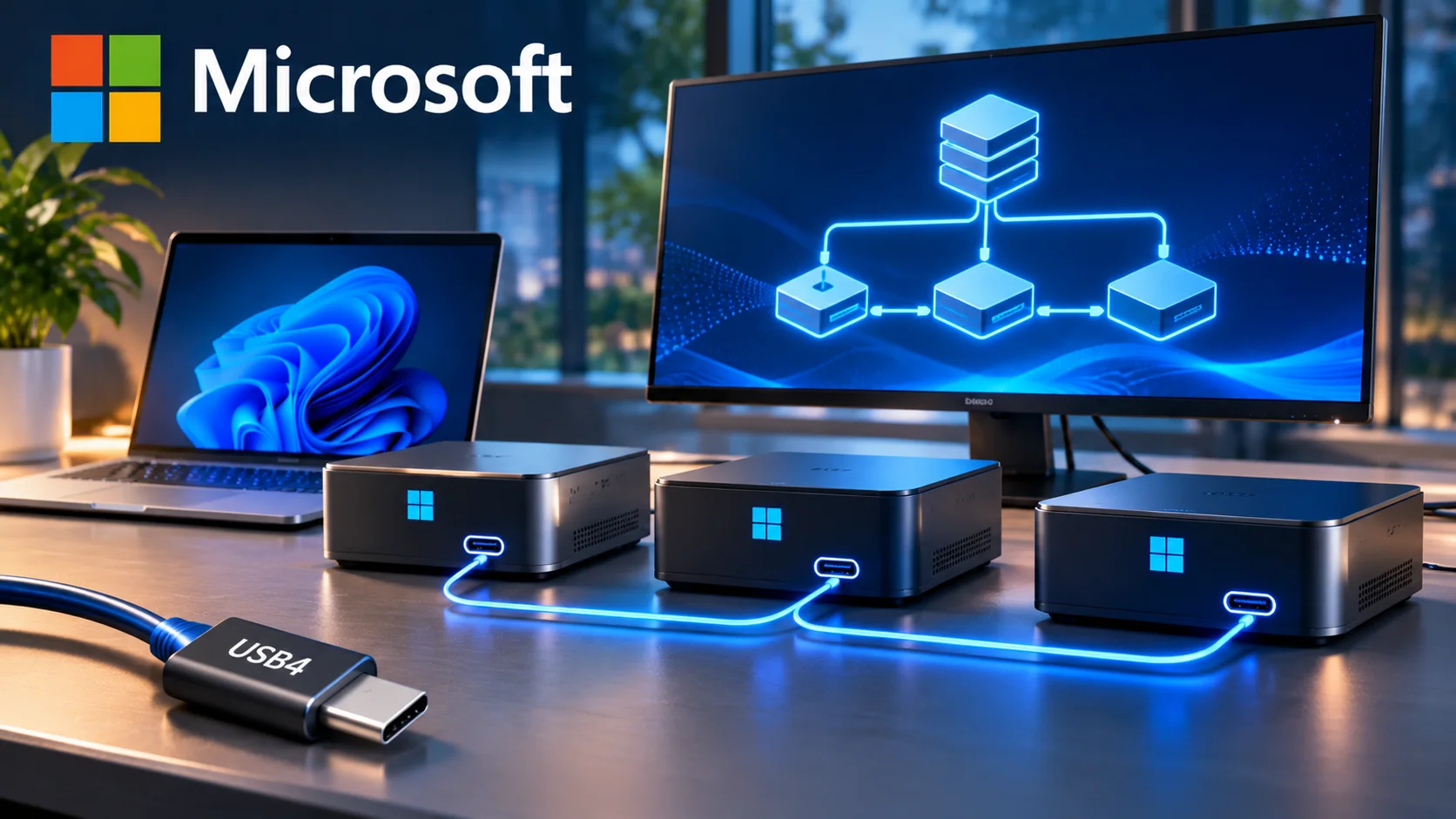
Microsoft is developing a way to connect multiple Windows PCs into a small distributed computing cluster using USB4 cables, potentially giving developers an alternative to relying on a single high-memory workstation. Its new RDMA over USB4 technology allows compatible computers to exchange data with low latency and coordinate their memory and GPU resources for demanding workloads.
The technology could make distributed local computing more accessible without requiring specialised data-centre network adapters, switches or dedicated server infrastructure. Microsoft published the technical details on November 19, 2026, describing the system as part of its broader approach to hybrid computing, where workloads can run locally or in the cloud depending on available resources.
USB4 Connections Bring Distributed Computing to Windows
RDMA, or Remote Direct Memory Access, allows one computer to transfer data directly between registered memory regions on another system, bypassing much of the conventional networking stack. This reduces communication delays and CPU overhead, making it useful for applications that exchange large amounts of data between machines.
Microsoft has adapted this capability for USB4 connections through Windows NetworkDirect, the interface already used for RDMA communication with specialised network adapters.
The implementation allows compatible PCs to establish direct connections and exchange data through USB4 host routers. Developers can use supported software frameworks to distribute workloads across multiple machines without needing a separate RDMA networking card.
Microsoft measured round-trip latency of approximately 28–50 microseconds for small messages between two connected PCs. This was around four times lower than Ethernet over UDP using the same USB4 connection, according to the company's tests.
An Alternative to a Single High-Memory Workstation
A major limitation of local computing is that demanding applications can exceed the memory or processing capacity of an individual computer. Developers then have to reduce model sizes, move workloads to cloud infrastructure or invest in more specialised hardware.
Distributed local computing offers another approach. Multiple compatible PCs can contribute their available memory and GPU computing resources to a workload, allowing supported applications to execute across the connected systems.
Microsoft demonstrated the technology using clusters of AMD Ryzen AI Max-powered mini PCs and Intel Core Ultra Series 3-based computers. The company tested configurations involving up to three AMD systems and four Intel systems.
These demonstrations show how smaller computer clusters could handle workloads that would otherwise require a more powerful individual machine. However, the systems do not automatically combine their resources for every application. Software must support distributed execution to take advantage of the connections.
Hardware and Network Requirements Remain Important
The technology requires USB4-capable Windows PCs, compatible drivers and an application framework that supports NetworkDirect. Each computer must have enough USB4 ports to connect directly to every other machine in the cluster.
Microsoft recommends a full-mesh arrangement, with a separate direct cable between every pair of computers. Daisy-chaining the systems can significantly reduce performance.
USB4 connections operating at 40Gbps are supported, while 80Gbps connections offer twice the nominal bandwidth. Actual performance also depends on memory capacity, memory bandwidth, GPU capabilities and the workload being processed.
The system therefore does not eliminate hardware requirements. Instead, it provides another way to distribute available resources across several machines.
Developer Preview Before Wider Windows Availability
Microsoft has released its open-source NetworkDirect provider for USB4, along with sample code and testing tools. However, the Windows build required to enable the feature was still forthcoming when the company published its announcement.
The developer preview is expected to reach Windows Insiders through the Experimental Channel under Future Platforms. It also requires test signing and changes to system settings, making dedicated test computers preferable to everyday devices.
Microsoft is exploring support for additional PC platforms, silicon partners and future Windows releases. Wider availability will depend on feedback from developers and progress in distributed AI software frameworks.
For the broader computing market, the development points towards a more flexible infrastructure model. Instead of depending entirely on one powerful workstation or a conventional server cluster, developers could eventually build smaller computing environments from compatible PCs they already own. The technology remains experimental, but it offers a new direction for local infrastructure and resource sharing.