Notion AI Chat Transcripts Exposed in Fireworks AI Security Breach
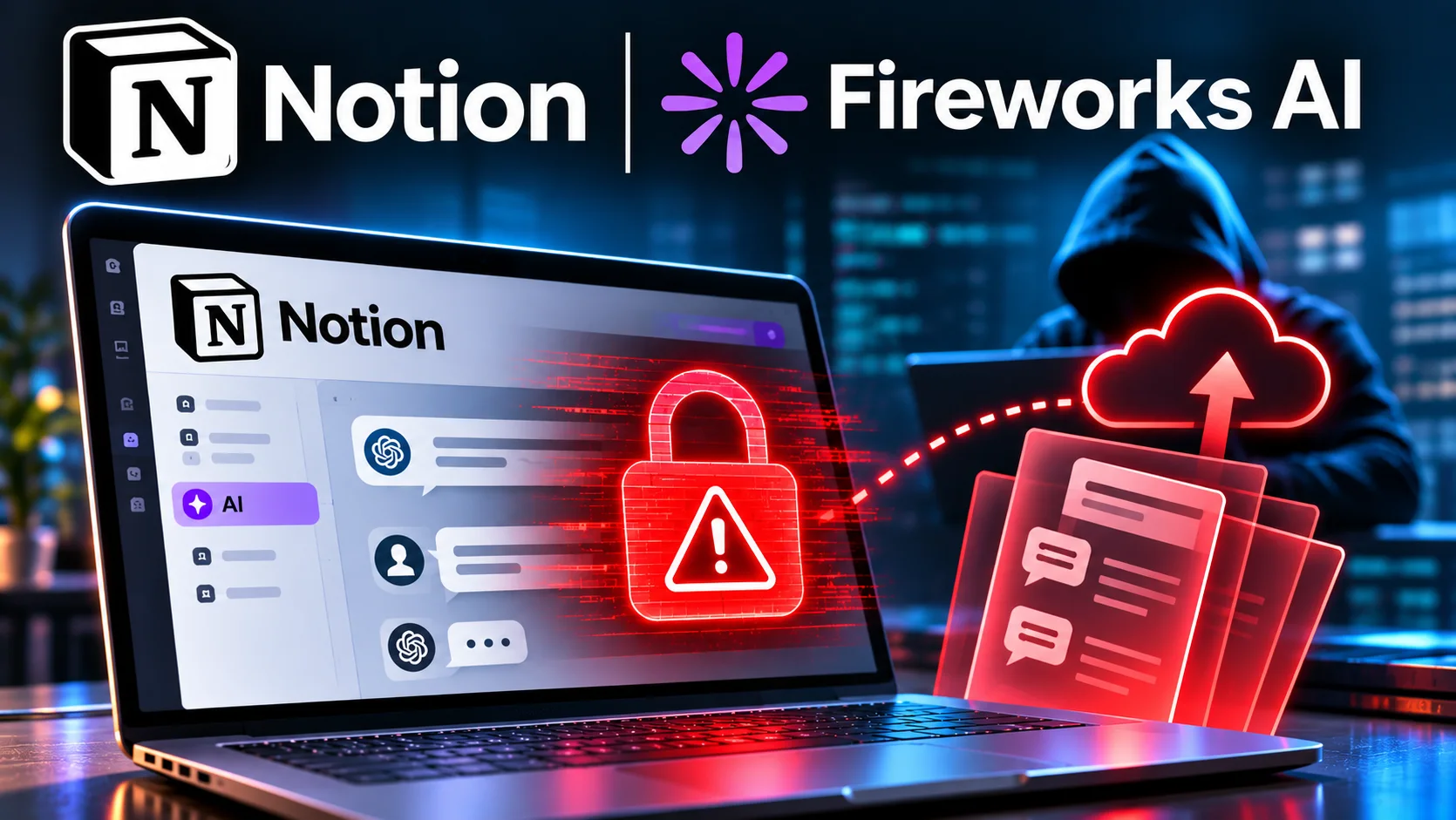
A security incident at Fireworks AI, an artificial intelligence infrastructure provider used by Notion, exposed chat transcripts associated with Notion AI's Insights feature. The disclosure, reported on November 11, 2026, highlights the security challenges businesses face when relying on external providers to process AI conversations and enterprise information.
Notion said fewer than 1% of its workspaces may have been affected. The exposed material included chat transcripts used to analyse how customers interacted with Notion AI. However, the company said that transcripts from the vast majority of affected workspaces could not be attributed to specific users or workspaces because they lacked identifying labels.
How the Fireworks AI Security Incident Affected Notion
Notion initially learned about the incident on November 2, when Fireworks AI reported that malicious actors had accessed a limited dataset. Its initial investigation identified the material as synthetic testing data rather than customer conversations.
By November 3, Notion had disconnected its systems from Fireworks, deleted its data from the provider's systems and stopped communications with the infrastructure platform. However, the investigation continued after Fireworks provided further information.
On November 6, Fireworks notified Notion that customer information might also have been accessed. The provider confirmed the additional dataset on November 8. Notion subsequently discovered that it contained AI chat transcripts associated with the Insights feature.
Notion clarified that the incident did not involve a direct breach of its own systems. It also said no other Notion features or workspace data were affected.
What Information Was Exposed?
The exposed transcripts came from Insights, a Notion feature designed to help workspace administrators understand how employees use AI tools. Fireworks supported the feature through classification jobs that analysed AI usage.
Notion said most of the affected transcripts were unattributable. They did not include labels identifying the person who wrote them or the workspace they belonged to. The transcripts also did not contain tool-call results, which are outputs generated when an AI system interacts with external tools.
However, the absence of identifying labels does not necessarily mean that every conversation was anonymous. Information written directly into a chat could potentially reveal details about its author or organisation.
Notion advised affected customers to treat the exposed material as potentially compromised. It also recommended changing passwords, API keys and other credentials if they had been entered into Notion AI during the relevant period.
Third-Party AI Infrastructure Creates New Security Risks
The incident highlights a growing challenge for businesses adopting AI-powered workplace software. Companies increasingly depend on external infrastructure providers to run language models, process conversations and support additional AI features.
This creates additional points where sensitive information must be protected. Even when a software company maintains strong security controls within its own environment, data processed or stored by an external provider can introduce separate risks.
Notion has disabled the Insights feature while investigating the incident and stopped serving open-weight models through Fireworks. The company has also contacted customers whose workspaces it identified as potentially affected.
The incident does not establish that all third-party AI services are unsafe. However, it demonstrates why organisations need clear data-retention policies, vendor security assessments and controls over the information shared with external AI systems. As AI becomes more deeply integrated into enterprise workflows, the security of the infrastructure behind these products will become just as important as the applications themselves.