Nuro, Lucid and Uber Begin Driverless Robotaxi Testing in California
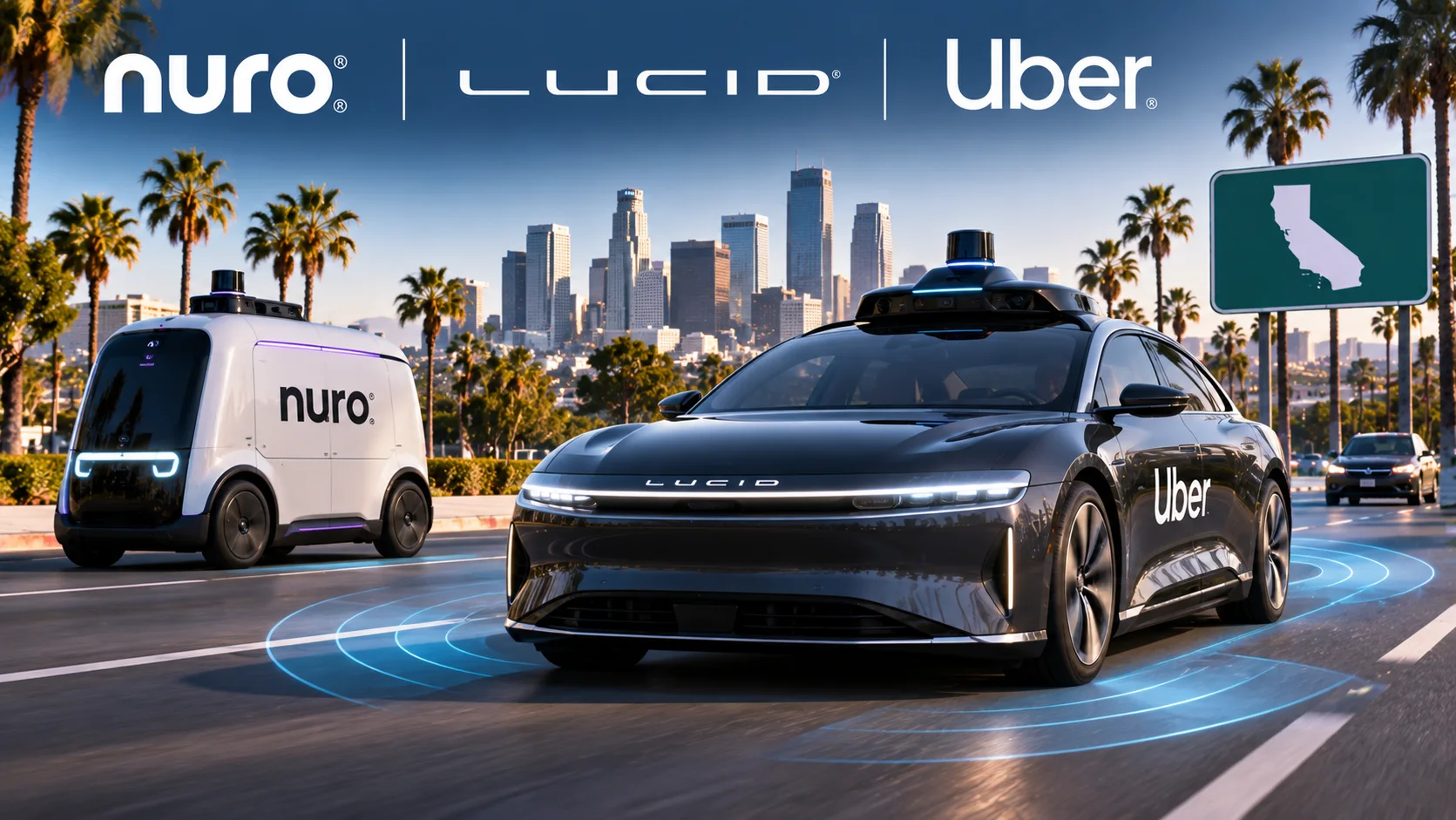
Nuro, Lucid and Uber have begun fully driverless testing of their robotaxi vehicles on public roads across the San Francisco Bay Area, marking a new stage in their autonomous mobility partnership. The companies have removed safety operators from the vehicles and are preparing to introduce employee rides before opening the service to the public.
Announced on 24 November 2026, the testing is taking place in Palo Alto, Mountain View, Los Altos and Sunnyvale. The companies expect to launch the commercial robotaxi service in the first quarter of 2027, with plans to extend testing to more Bay Area cities next year.
The programme uses modified Lucid Gravity electric SUVs equipped with Nuro's autonomous-driving technology. Lucid has delivered more than 100 vehicles with hardware, software and passenger-experience updates for the next phase of development.
Driverless Robotaxi Testing Moves Beyond Supervised Trials
Nuro had been testing the Lucid Gravity robotaxi on public roads in the San Francisco Bay Area and Houston since December 2025. Those trials involved a safety driver who could intervene when necessary. The latest phase removes that person from the vehicle.
The transition follows additional validation work, including large-scale simulation and testing at Nuro's closed-course facility in Las Vegas. The company says its safety validation process assessed the autonomous system's response to challenging situations such as pedestrian encounters, right-of-way violations, unusual traffic conditions and other road hazards.
Nuro uses a Safety Case Framework to evaluate whether its autonomous-driving system is ready for driverless operation. The process combines road-testing data, simulation results, system performance and operational procedures against defined safety and reliability requirements.
The programme's move to public-road testing without a safety operator follows Nuro's receipt of a California Department of Motor Vehicles permit for driverless testing earlier in 2026.
How the Three Companies Are Working Together
The partnership divides responsibilities across autonomous-driving technology, vehicle manufacturing and ride-hailing operations.
Nuro supplies the Nuro Driver, its Level 4 autonomous-driving platform, along with system validation and related expertise.
Lucid provides the vehicle platform, manufacturing capabilities and factory integration. The initial robotaxi fleet is based on the Lucid Gravity.
Uber contributes its ride-hailing network, fleet operations and passenger-facing experience, including in-cabin features and rider controls.
The vehicles use a sensor suite combining cameras, lidar and radar, with a roof-mounted halo. The system is designed to provide the autonomous platform with information about the vehicle's surroundings.
Uber has committed to purchasing at least 35,000 Lucid vehicles equipped with Nuro's technology for the programme. The companies have also outlined plans to use future Lucid Midsize vehicles as the service expands.
Employee Rides Ahead of 2027 Public Launch
The next phase will introduce employee rides in driverless vehicles. The companies said these rides would begin soon but did not announce a specific start date.
The first public service is planned for the San Francisco Bay Area in the first quarter of 2027. Uber and its fleet partners are expected to own and operate the vehicles, with rides made available through Uber's platform.
The planned launch follows an earlier target of starting service in 2026. The updated timeline gives the partners additional time to test the vehicles and prepare their operating systems before public passenger rides begin.
For now, the programme remains in its testing phase. The companies have not announced public fares or a confirmed date for the first customer rides.