Nvidia China Chip Shipments Halted Despite US Export Approval
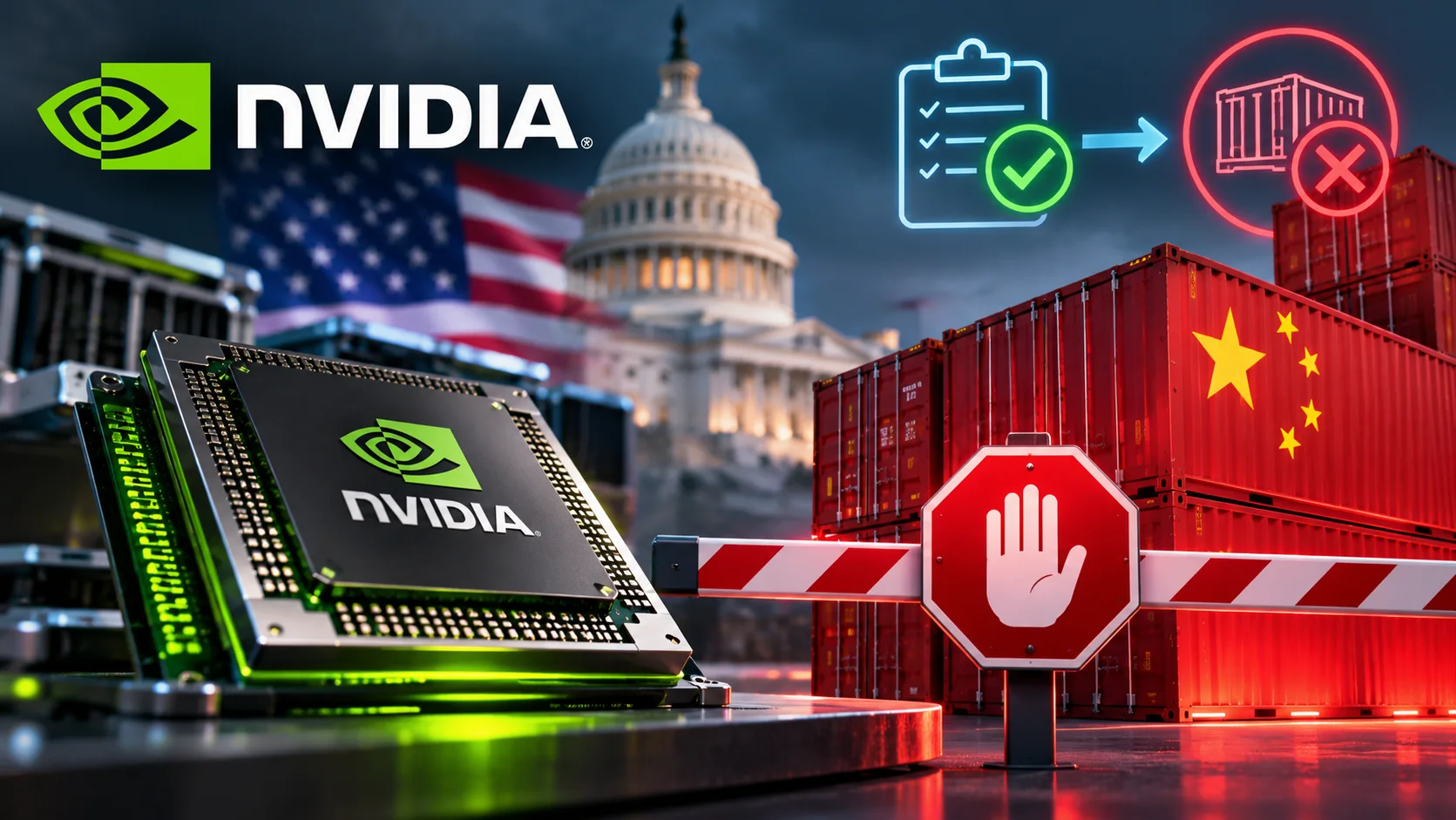
Nvidia has stopped shipping licensed Hopper-generation data-centre processors to China, despite previously receiving permission from the United States to sell certain advanced AI chips to approved Chinese customers. Interim CEO Colette Kress confirmed the halt during the company's latest earnings call, leaving the future of its China business uncertain.
The company reported $2.4 billion in sales of licensed Hopper data-centre products to China during the quarter ended October 25. However, Nvidia's latest outlook includes no further shipments of these processors. Kress did not explain why deliveries had stopped or whether the decision would be permanent.
Nvidia China Chip Shipments Stop Despite Earlier Approval
During the earnings call, Kress said Nvidia was no longer shipping licensed Hopper data-centre products to China and that none were included in the company's current guidance.
The announcement marks a significant change after Washington eased its export licensing policy for certain H200 processors in January 2026. The policy allowed applications for sales to approved Chinese customers to be reviewed individually, subject to security conditions.
The Hopper family includes the H200, a processor designed to support demanding artificial intelligence workloads, including training and running advanced AI models. The chips are manufactured for Nvidia by Taiwan Semiconductor Manufacturing Company (TSMC).
The US had previously approved H200 sales to 10 Chinese companies, including Alibaba, Tencent and ByteDance, according to earlier Reuters reporting. The licensing arrangement also included a 25% tariff on eligible chips imported into the United States before onward shipment to China.
China Restrictions Add Another Barrier to H200 Sales
The shipment halt comes amid restrictions on both sides of the US-China technology relationship. While Washington controls access to advanced semiconductor technology, Beijing has also limited imports of certain foreign processors as it attempts to reduce China's dependence on US suppliers.
The restrictions have created uncertainty for Chinese technology companies seeking computing capacity for their AI development programmes.
Reuters previously reported that approximately 600,000 H200 processors were being held in Hong Kong while awaiting Chinese approval for large-scale shipments to mainland China. Several major Chinese internet companies had reportedly obtained around 10,000 processors each in recent months.
The situation illustrates how export permissions alone may not guarantee that advanced chips can reach their intended customers. Regulatory decisions in both countries can affect supply, delivery schedules and commercial planning.
What the Halt Means for Nvidia's China Business
Nvidia's $2.4 billion in licensed Hopper sales during the latest quarter shows that the China market had remained a significant source of business despite years of export restrictions. The absence of further shipments from its current outlook creates a new uncertainty for that revenue stream.
The company has not provided a reason for stopping deliveries, so it remains unclear whether the move reflects regulatory concerns, Chinese import restrictions, commercial decisions or a combination of factors.
For the wider semiconductor industry, the development highlights the difficulty of maintaining cross-border trade in advanced AI hardware. Chipmakers must navigate changing export rules while customers seek reliable access to processors for increasingly demanding computing workloads.
The immediate impact is clear: Nvidia is no longer shipping licensed Hopper data-centre products to China. Whether those deliveries resume will depend on decisions that neither the company nor its customers can fully control.