Nvidia Shares Fall as Investors Reassess Risks After Jensen Huang's Return
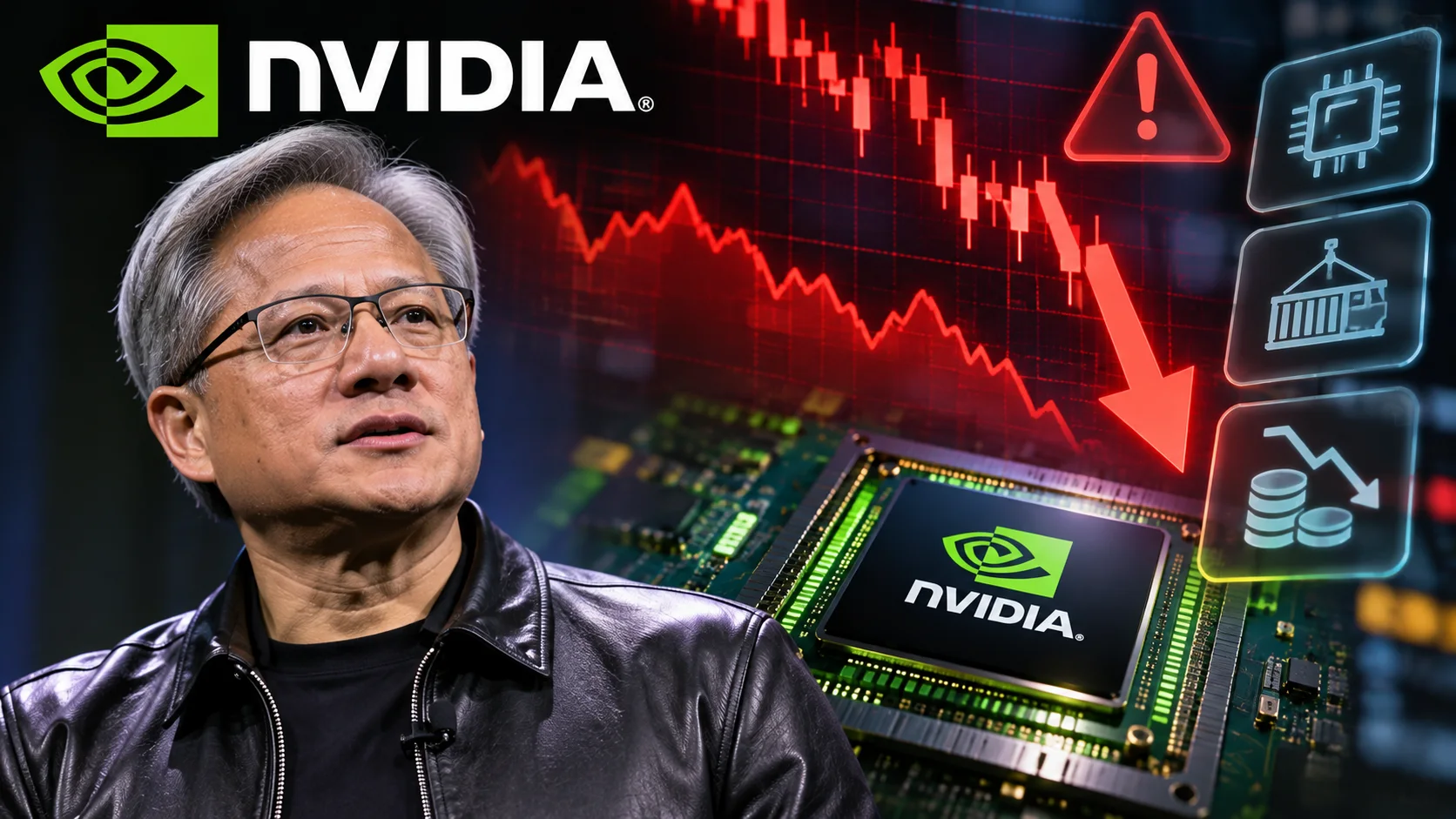
Nvidia shares fell 5.2% in premarket trading on Tuesday, 24 November, as investors reassessed the risks surrounding Jensen Huang's return as chief executive. The decline followed a 31.5% surge in the previous session, when the chipmaker's board announced that it was reinstating its co-founder as president and CEO with immediate effect.
The previous day's rally added more than $952 billion to Nvidia's market value. However, the initial enthusiasm weakened as investors turned their attention to unresolved legal investigations, corporate governance questions and political pressure surrounding the leadership decision.
The developments show that Huang's return has not removed the uncertainty surrounding Nvidia, despite the board's unanimous decision to restore him to the top position.
Nvidia Shares Retreat After Record Rally
The company's shares had climbed sharply on Monday after Nvidia confirmed Huang's reinstatement. The board said it had unanimously approved the decision following discussions with Huang and input from senior US government officials.
It also stated that it was satisfied with his candour and ability to lead the company and believed his return posed no national security risk.
The market response changed on Tuesday. Nvidia shares were last down 5.2% at $156.40 in premarket trading, according to Reuters. The pullback also affected other AI-related stocks, as investors reconsidered the broader implications of the leadership controversy.
Despite the decline, the previous session's gains had pushed Nvidia back into second place among the world's most valuable publicly traded companies, behind Apple.
Legal and Political Risks Remain
Huang resigned on 12 November following revelations about extramarital relationships, including allegations involving a Chinese businesswoman suspected by US authorities of having links to Chinese intelligence. Huang acknowledged being unfaithful to his wife but has not publicly addressed every allegation in detail. The espionage claims have not been established.
The controversy triggered investigations and increased scrutiny of Nvidia's corporate oversight. The company's board has formed an independent committee to investigate whether foreign intelligence efforts targeted Huang. That inquiry will continue despite his reinstatement.
Nvidia is also facing scrutiny from US authorities over potential accounting irregularities and alleged chip smuggling. The company has said it will cooperate with ongoing government investigations and inquiries.
The political response has added another layer of uncertainty. US lawmakers from both parties have questioned the circumstances surrounding Huang's return and called for stronger controls to prevent restricted AI chips from reaching China.
Questions Over Nvidia's Board Independence
The decision to reinstate Huang has also raised questions about the independence of Nvidia's board. US President Donald Trump publicly supported his return, and Reuters reported that Trump and senior administration officials pressed board members to bring the co-founder back.
Some investors and governance experts have questioned whether the board completed sufficient scrutiny before reversing its earlier position. The independent investigation into the foreign intelligence allegations remains open, while separate regulatory inquiries continue.
The concerns extend beyond Huang's individual position. Nvidia occupies a central role in the global AI supply chain, supplying advanced processors used by major cloud companies, data-centre operators and AI developers. Uncertainty around its leadership and regulatory exposure could therefore affect sentiment across the wider semiconductor industry.
Huang has returned to the position he held before his resignation, but the investigations and governance questions remain unresolved. For investors, the next challenge is assessing whether the company can maintain its AI-chip growth while addressing the scrutiny surrounding its leadership and export-control responsibilities.