Optimizely Supply-Chain Attack Exposes Websites Linked to 178 Organisations
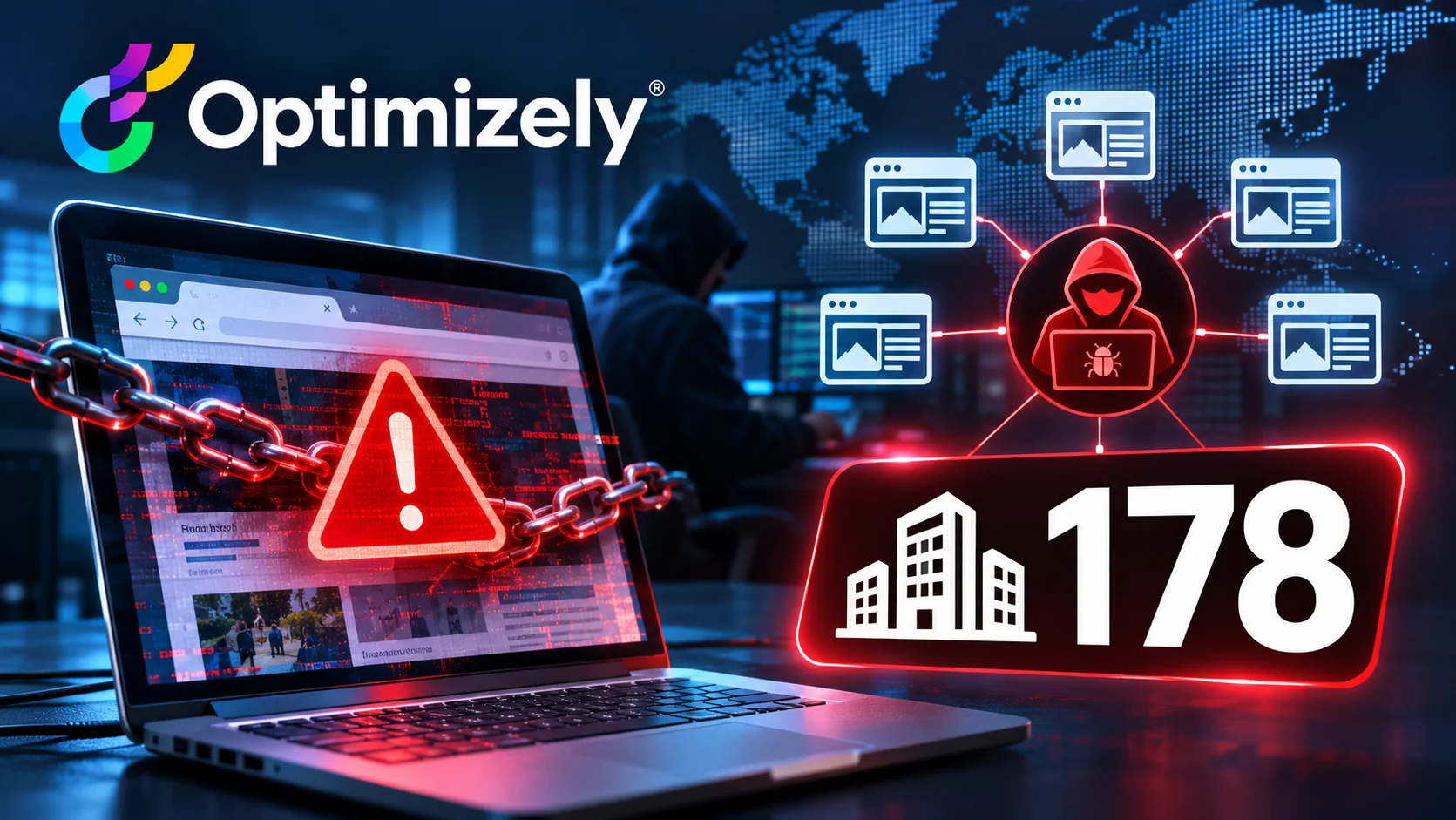
A major website supply-chain attack has exposed visitors to malicious JavaScript across websites associated with 178 organisations, including Zoom, HSBC, Equifax, CNN, Salesforce and IKEA. Attackers exploited a vulnerability in Optimizely's Web Experimentation platform to insert unauthorised code into customer projects.
The Optimizely supply-chain attack was identified on November 16 by security researcher Scott Helme and his team at Report URI. The injected scripts attempted to redirect cryptocurrency payments, capture payment-card information, collect browser cookies and screenshots, and target iPhone and iPad users with exploit kits. The incident demonstrates how a security weakness in one widely used third-party service can affect organisations that otherwise maintain separate websites and infrastructure.
How the Optimizely Supply-Chain Attack Spread
Optimizely's Web Experimentation platform allows organisations to test website changes and personalise visitor experiences. Customers typically integrate the service by adding a JavaScript snippet to their websites. That snippet loads additional code from Optimizely's content delivery network.
According to Report URI, attackers gained the ability to modify the Project JavaScript field within customer projects. They inserted a malicious loader that allowed harmful code to reach visitors through scripts served from Optimizely's own infrastructure.
Helme's team examined 1,611 Optimizely snippets and identified 188 infected files associated with 178 organisations. The affected organisations included businesses across technology, banking, retail, media and other industries. The researcher warned that the actual number could be higher because the investigation covered only the snippets his team could locate and examine.
Malware Targeted Cryptocurrency and Payment Information
The injected JavaScript contained several malicious functions. It attempted to replace legitimate cryptocurrency wallet addresses with addresses controlled by attackers, potentially redirecting payments. It also targeted payment-card details entered on affected websites and collected browser cookies and screenshots.
The campaign additionally delivered the Coruna and DarkSword iOS exploit kits to certain iPhone and iPad users. These tools are associated with attacks against Apple devices, although delivery of an exploit kit does not by itself establish that a device was successfully compromised.
Report URI reported evidence of cryptocurrency transfers to attacker-controlled wallets. However, Reuters said it could not independently establish whether attackers successfully stole information from website visitors or determine how many users were affected.
Optimizely Fixes the Vulnerability
Optimizely confirmed that an unauthorised party had exploited a vulnerability in its Experimentation platform to add malicious JavaScript to some customer projects. The company said it fixed the vulnerability, removed injected code from affected projects and took steps to secure affected accounts.
It also introduced additional protections intended to prevent unauthorised scripts from being delivered. Several affected organisations responded by disabling or removing Optimizely scripts while reviewing their exposure.
The responses varied. Reuters reported that Salesforce disabled the scripts as a precaution, while Equifax stopped using the platform and said it found no evidence that its own systems had been compromised. HSBC said unauthorised scripts were not active on its websites.
Third-Party Software Creates Wider Security Risks
The incident highlights a persistent challenge for website operators: external services often receive permission to run code directly in visitors' browsers. A compromise of one trusted provider can therefore create exposure across many unrelated websites.
Security measures such as restrictive Content Security Policies can help limit which scripts execute and where they can send data. However, policies that broadly trust a third-party provider may offer limited protection if that provider's own infrastructure or customer-project controls are compromised.
For businesses, the incident reinforces the need to monitor third-party scripts, restrict unnecessary permissions and review external dependencies regularly. Even organisations whose own systems remain secure can expose their visitors when a trusted website service becomes a route for malicious code.
Optimizely has addressed the reported vulnerability, but the full impact of the campaign remains uncertain. The incident leaves organisations with an important reminder: website security depends not only on their own systems, but also on every external service they allow to run code on their pages.