Tutor Intelligence Raises $75 Million to Scale AI-Powered Warehouse Robots
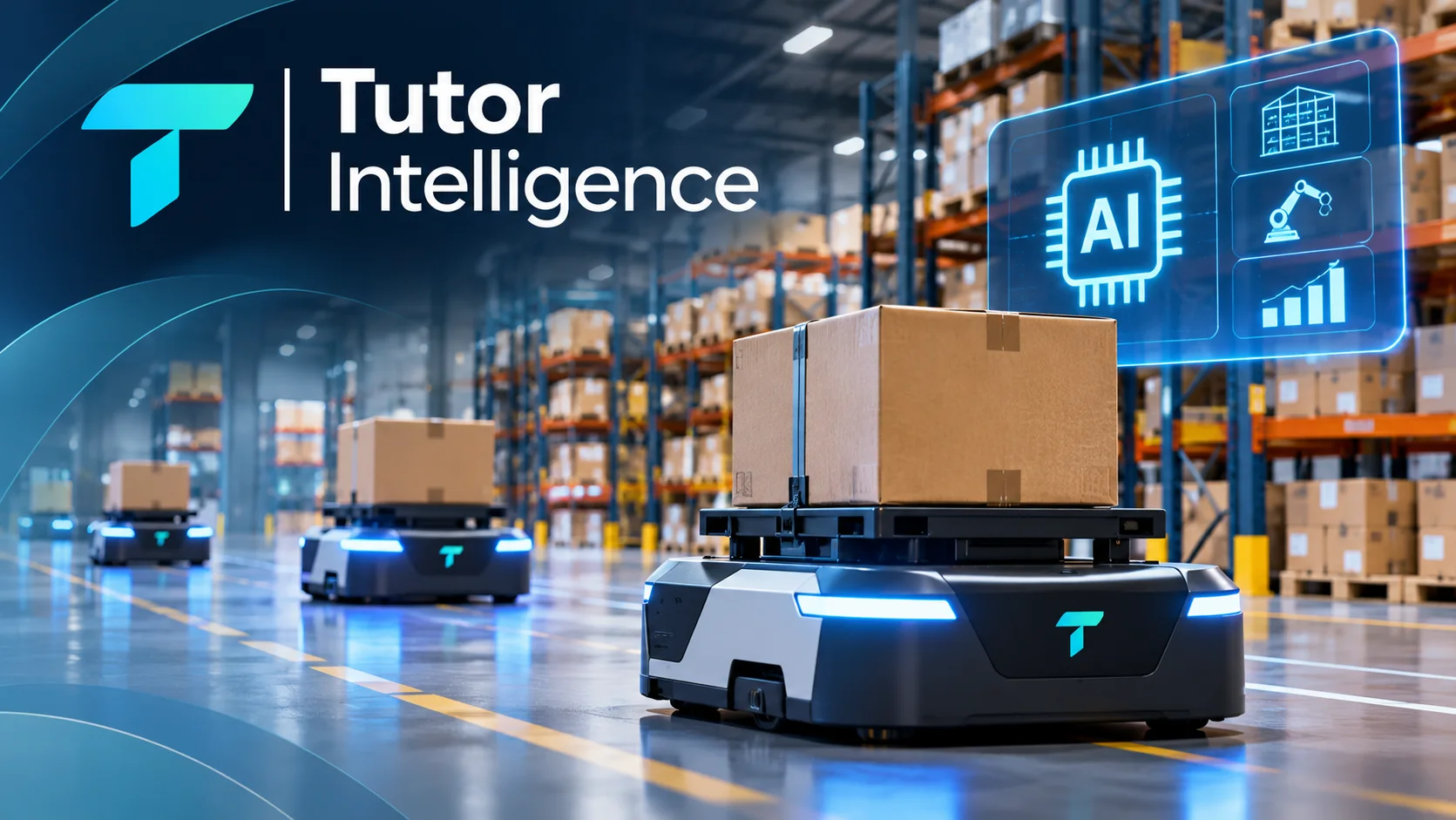
Tutor Intelligence has raised $75 million in a Series B round led by Andreessen Horowitz, taking its total capital raised to $117 million. The Massachusetts-based robotics company will use the funding to train its robot foundation models and expand production and deployment of its Sonny and Cassie robot workers across US factories and warehouses.
Union Square Ventures and Neo also participated, returning after leading Tutor’s Series A and seed rounds, respectively. The investment backs a model built around deploying robots in real facilities before they are fully autonomous. Remote human operators step in when machines need help, and the resulting operational data is used to improve the company’s models.
Tutor Intelligence uses real deployments to train its robots
Rather than developing a general-purpose robot before finding customers, Tutor starts with specific jobs in manufacturing and logistics. Its internet-connected robots work in production environments, where remote human operators known as “tutors” guide them through tasks that require assistance. Those interactions generate real-world training data.
Andreessen Horowitz said the approach gives customers value before full autonomy while allowing Tutor to collect data from actual industrial work. The investment firm said the robots are already operating across some of the largest manufacturing and logistics networks in the United States. Tutor reports that its robots are working in almost four times as many facilities as a year earlier.
The strategy reflects a wider shift in embodied AI, where developers seek physical-world data to help robots handle tasks beyond controlled demonstrations. GlobTechWire has examined this challenge in its coverage of the embodied AI race.
Sonny and Cassie target different warehouse tasks
The funding will support production and deployment of Tutor’s two robot systems. Cassie is a single-arm mobile robot designed for case picking, palletising and depalletising. Sonny uses two arms and is built for more dexterous work, including individual-item picking in e-commerce fulfilment. Both use the company’s models, allowing it to develop hardware and software as one platform.
Tutor introduced the latest generation of Cassie and Sonny in September. Its official product announcement describes their intended roles in warehouses and production facilities.
A different commercial model for industrial automation
Instead of requiring customers to buy robots upfront, Tutor sells robotic work by the hour or by the pick. The company says customers do not need an initial equipment purchase or a long-term contract. Tutor handles deployment and maintenance, and provides software and model updates.
The model is intended to make automation accessible to businesses that may not want to commit substantial capital to conventional industrial robotics. It also gives Tutor an ongoing role in operating the machines and gathering data from their work.
The company says nearly one-third of organisations that received its robots in the past 12 months were existing customers adding more units. It is targeting more than 1,000 robots under contract by the end of 2027, with all systems built and deployed from the United States.
Funding supports Tutor Intelligence’s next phase
The $75 million Series B will support frontier robot foundation model training and the manufacturing and deployment of Sonny and Cassie. Tutor has not disclosed a valuation as part of the announcement.
The round comes as robotics companies face two connected challenges: developing systems capable of varied physical tasks and proving they can operate reliably in commercial environments. Tutor’s strategy is to use customer deployments to address both, generating revenue while collecting data to improve its models. Its next test will be whether it can expand production and customer operations while maintaining performance across more industrial settings.