
UBTECH Opens 14,000-Square-Meter Factory for Humanoid Robots
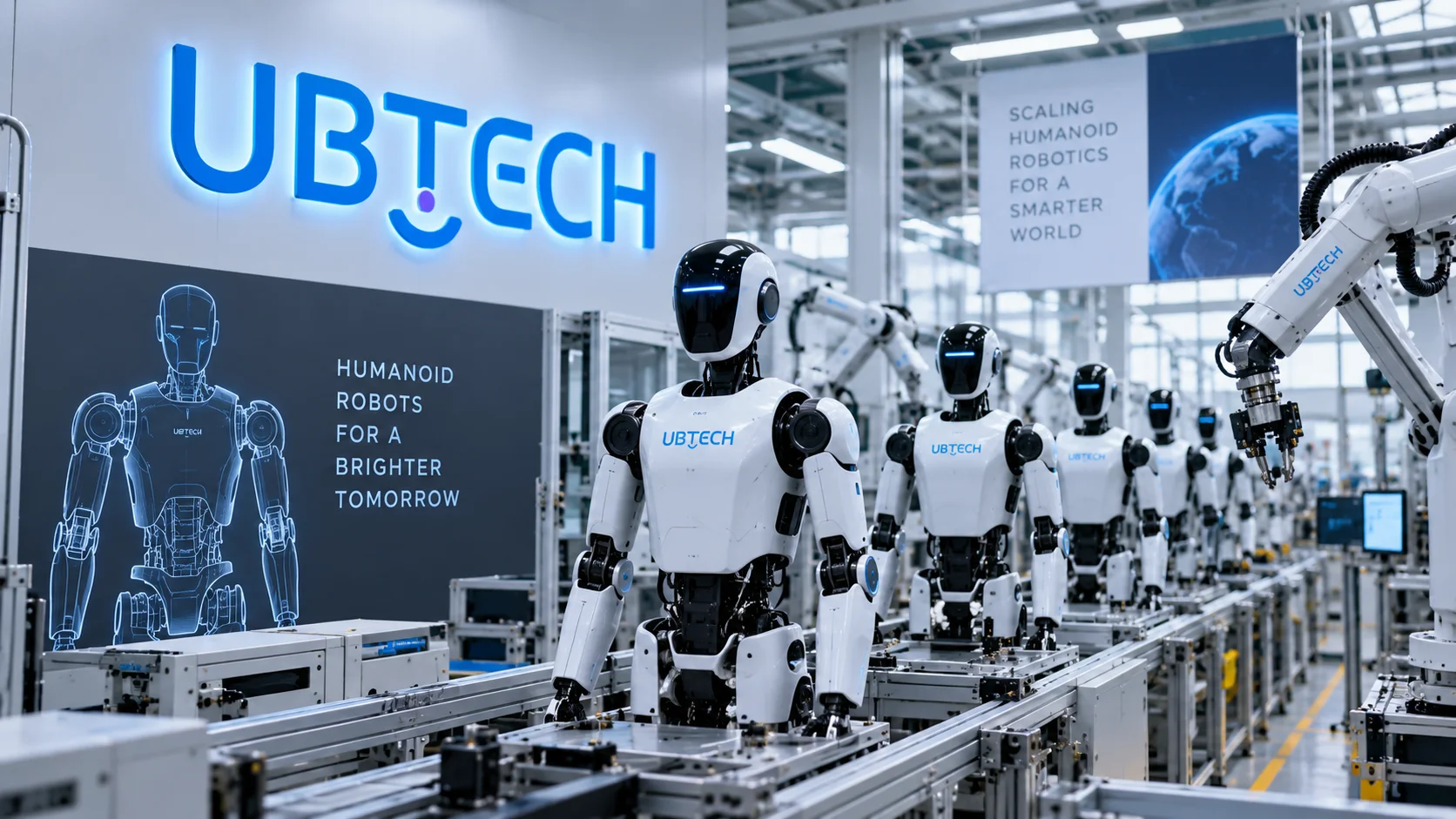
Chinese robotics company UBTECH has commissioned its new industrial humanoid robot super smart factory in Liuzhou, Guangxi, marking a move toward large-scale production of humanoid robots. The roughly 14,000-square-meter facility is designed to produce UBTECH’s Walker S series and Cruzr series robots, with planned annual capacity of more than 10,000 units.
The factory began production on September 12 and is designed around a flexible manufacturing system that can handle different robot models on the same production lines. UBTECH says the production design can achieve a cycle of about one completed robot every 10 minutes.
Robots Help Build Robots
One of the most notable features of the facility is the use of robots in the manufacturing process itself. Humanoid robots are used for tasks including material handling, while robotic arms and automated equipment support assembly operations.
The factory also uses automated guided vehicles and unmanned forklifts to move materials around the production floor. Each finished robot receives a unique identification code, allowing its components, assembly parameters and inspection records to be tracked throughout its lifecycle.
Walker S and Cruzr Robots Enter Large-Scale Production
The facility is primarily focused on UBTECH’s Walker S industrial humanoid robots and Cruzr series robots. Walker S is designed for industrial environments and can perform tasks such as material handling, inspection, screw tightening and parts assembly.
UBTECH has been working to move its humanoid robots beyond demonstrations and pilot deployments. The company says its Walker S series has already been used in industrial settings, including automotive manufacturing environments, where robots can take on repetitive or physically demanding tasks.
Digital Twin Technology Supports the Factory
UBTECH developed the Liuzhou facility with Siemens, using digital manufacturing technologies to simulate and optimise factory operations before and during production. The system includes digital-twin technology and factory simulation tools designed to model logistics, workstations and material movement.
The factory also uses a manufacturing operations management system to coordinate production and scheduling. This approach is intended to make the production lines more flexible, allowing UBTECH to adjust manufacturing processes as robot designs and customer requirements change.
Humanoid Robotics Moves Toward Mass Production
The factory represents a shift in the humanoid robotics industry from developing individual prototypes toward building robots at industrial scale. Manufacturing remains one of the biggest challenges for humanoid robotics because the machines contain complex mechanical, electrical and computing systems that require precise assembly.
UBTECH’s Liuzhou facility is designed to address that challenge through automation, flexible production and digital manufacturing. Its planned capacity of more than 10,000 robots a year will ultimately need to be matched by actual orders and deployments, but the facility gives the company a significantly larger manufacturing base as demand for industrial humanoid robots develops.