
UK Secures Thousands of Commercial Refrigerators After Cyberattack Warnings
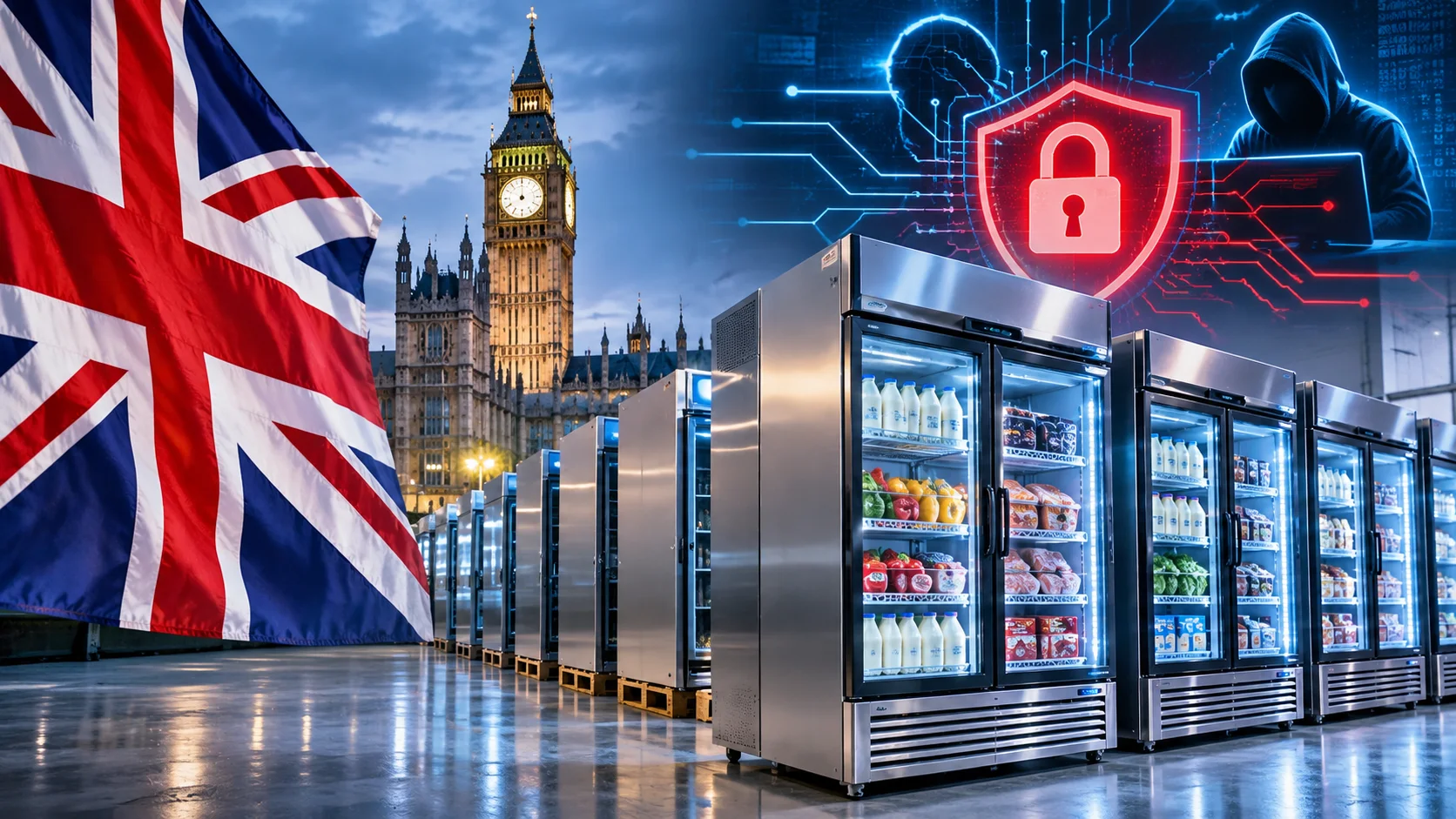
UK cybersecurity specialists and government agencies have carried out a major operation to protect commercial refrigerators and freezers from potential cyberattacks. The effort followed incidents across Europe in which attackers manipulated connected refrigeration equipment, causing food losses and disrupting supermarket operations.
Reported on November 20, the operation involved identifying vulnerabilities in refrigeration control systems used by supermarkets, warehouses, restaurants and other businesses. Security consultants at Omega Solutions discovered a significant weakness in equipment manufactured by British company Resource Data Management (RDM). Cybersecurity firm Pen Test Partners subsequently helped investigate additional vulnerabilities and coordinate remediation.
The operation highlights the growing importance of refrigeration system cybersecurity as food businesses increasingly depend on internet-connected equipment to monitor and manage physical operations.
UK identifies vulnerabilities in commercial refrigeration systems
The British refrigeration industry relies heavily on RDM controllers, which differ from the Danfoss equipment associated with several earlier European incidents.
Researchers initially identified a vulnerability in RDM systems before Pen Test Partners examined the equipment and discovered additional weaknesses. The findings prompted cooperation involving the National Cyber Security Centre (NCSC), retailers, industry organisations and other government bodies.
According to Pen Test Partners, the operation lasted approximately three weeks. Teams worked to identify exposed controllers, contact affected organisations and reduce the risk of unauthorised access.
The researchers said the work involved thousands of refrigeration controllers across supermarkets, food manufacturers and large cold-storage facilities. Many organisations moved equipment away from the public internet or placed it behind private networks and VPNs.
European fridge attacks raised the security alarm
The UK operation followed a series of incidents affecting commercial refrigeration systems in Europe.
Earlier in November, cyberattacks disrupted refrigeration equipment in several countries, including Sweden and Belgium. Similar incidents in France during October forced businesses to discard substantial quantities of food after attackers manipulated cooling settings.
French intelligence and cybersecurity agencies attributed the October attacks to Iran's Revolutionary Guards. That attribution remains an official allegation rather than an independently established finding.
The incidents demonstrated how attackers can cause physical and financial disruption without directly stealing customer information or conventional business data.
Commercial refrigeration systems are connected to monitoring platforms that allow operators to manage temperatures across multiple locations. When exposed controllers are compromised, attackers may be able to interfere with cooling operations and put stored food at risk.
Manufacturer releases firmware updates as researchers warn of remaining exposure
RDM responded to the findings by developing and releasing updated firmware intended to address the reported vulnerabilities. Pen Test Partners said the manufacturer cooperated with researchers during the remediation process.
However, the operation does not mean every potentially exposed refrigeration system has been secured. Pen Test Partners warned that smaller cold-chain operators may remain vulnerable because the security operation could not identify every controller or reach every organisation in the supply chain.
The researchers recommended removing refrigeration controllers from direct public internet access and applying the latest available firmware.
The NCSC also supported potentially affected organisations and shared security guidance with food and retail businesses. The UK government had previously acknowledged that a small number of British organisations were affected by vulnerabilities associated with refrigeration systems, although the overall domestic impact was limited.
Connected industrial equipment creates wider cybersecurity risks
The incident illustrates why operational technology requires the same attention to security as conventional business networks.
Refrigeration controllers, industrial sensors and other connected devices directly influence physical processes. A compromise can therefore affect inventory, production, storage conditions and supply-chain operations.
For retailers and food manufacturers, refrigeration system cybersecurity is not simply an IT concern. It is also connected to business continuity and food safety.
The UK operation has reduced the immediate exposure identified by researchers, but the remaining challenge is ensuring that smaller operators and other organisations across the cold chain maintain secure configurations and updated equipment.