ULA Vulcan Rocket Failure Destroys 40 Amazon Leo Satellites in Major Launch Setback
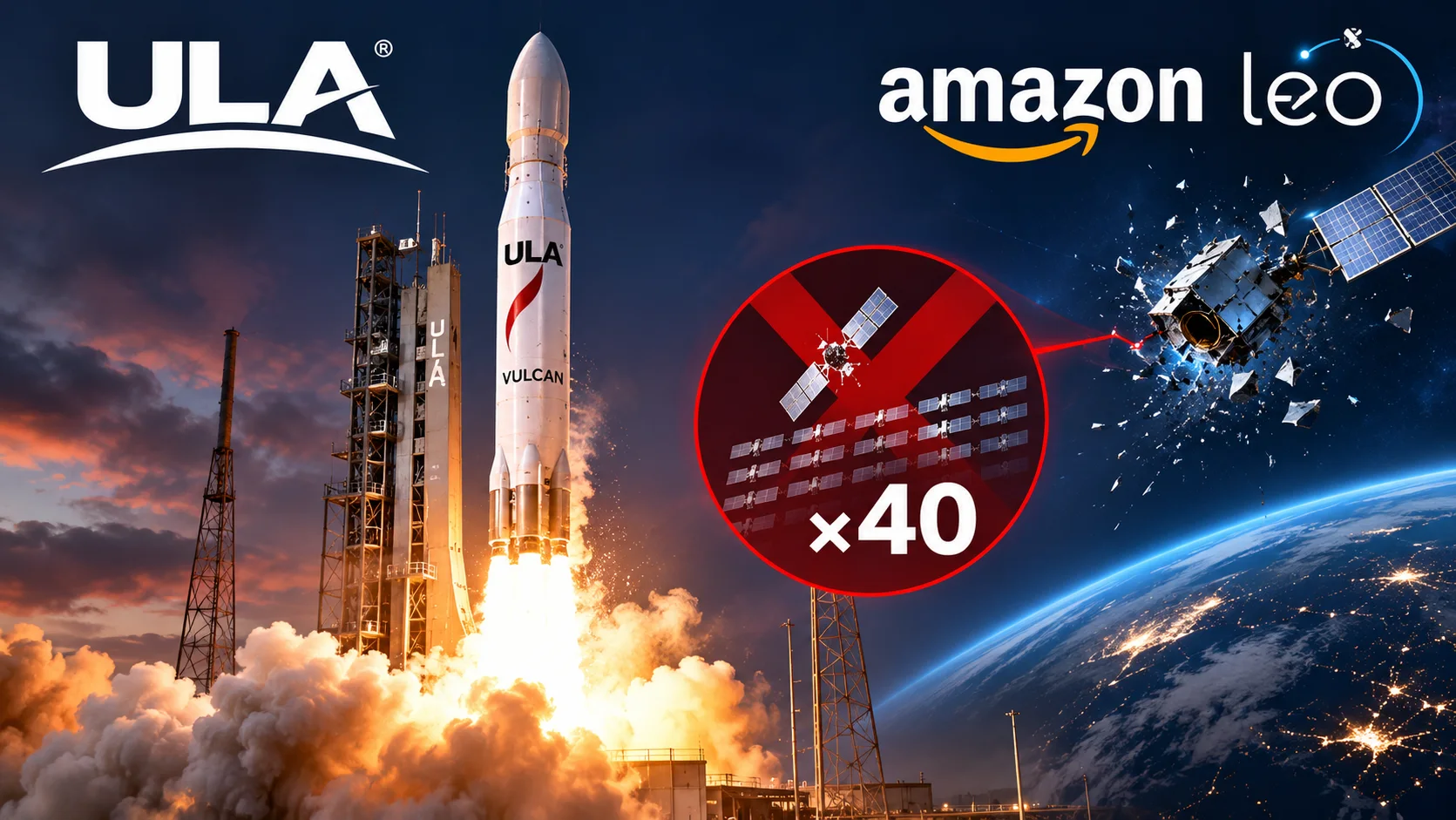
United Launch Alliance (ULA) has suffered its first outright rocket mission failure, losing 40 Amazon Leo broadband satellites after an anomaly struck its Vulcan rocket approximately 10 minutes into flight on November 15. The vehicle failed to deliver its payload into orbit, disrupting a mission that marked the beginning of a major launch partnership between the two companies.
The ULA Vulcan rocket failure occurred during the vehicle's return to flight after a nine-month gap. The rocket lifted off from Space Launch Complex 41 at Cape Canaveral Space Force Station in Florida at 12:40 p.m. EST. ULA later confirmed that the mission had failed, but said it did not yet have enough information to identify the cause. <Cite refs={["turn805588search0","turn805588news18"]}/>
Anomaly During the Vulcan Rocket's Flight
ULA reported that its launch director received data confirming an anomaly around 10 minutes after liftoff. The rocket did not complete its planned mission, leaving all 40 Amazon Leo satellites without the intended orbital deployment.
The flight appeared to progress through the solid rocket booster separation before the problem emerged later in the mission. Spaceflight Now's analysis of flight telemetry indicated that the anomaly occurred during the Centaur upper stage's engine firing. However, ULA has not officially confirmed the precise failure mechanism.
The incident is particularly significant because Vulcan had completed only four previous flights. It is also the first outright mission failure for ULA since Boeing and Lockheed Martin formed the launch company in 2006. <Cite refs={["turn805588search0","turn805588news18"]}/>
Amazon Leo Loses a Major Satellite Deployment Mission
The lost payload represents an important setback for Amazon's satellite internet programme. The 40 spacecraft formed the largest group Amazon Leo had planned to deploy in a single launch at that stage of its rollout.
The mission was the first of 38 Vulcan launches contracted by Amazon. The company had selected the rocket as a major part of its deployment strategy, alongside launch services from Arianespace, Blue Origin and SpaceX.
Amazon acknowledged the loss and expressed confidence in ULA's ability to learn from the incident. Its wider launch programme offers some flexibility, but the failure removes 40 satellites that were intended to expand the network's coverage and capacity. <Cite refs={["turn690144search0","turn690144search1"]}/>
ULA Investigation Could Delay Future Vulcan Launches
ULA has pledged to work with Amazon and other relevant organisations to establish the cause and determine corrective measures before returning the rocket to flight. The investigation will examine flight data and the vehicle's performance throughout the mission.
The timing adds pressure because Vulcan was already returning from a lengthy pause. Earlier flights experienced solid rocket booster nozzle problems, prompting technical reviews and changes before the November mission. Those earlier issues did not prevent the vehicles from reaching their intended orbits, making this incident a more serious setback.
The precise duration of any grounding remains unknown. The Space Force will also need to consider the investigation's findings when assessing future national security launches on Vulcan. <Cite refs={["turn805588search0","turn805588search2"]}/>
What the Failure Means for the Satellite Internet Race
Amazon is working to build a constellation of more than 3,000 low Earth orbit satellites to compete in the broadband market, where SpaceX's Starlink already has a substantial operational network.
The company is not relying exclusively on Vulcan. Its November 15 mission update listed another Ariane 6 launch carrying 36 Leo satellites for no earlier than November 23. That schedule provides an alternative route for continued deployment, although it does not replace the lost Vulcan payload.
For ULA, the immediate challenge is to identify the failure and demonstrate that the vehicle can return to reliable operations. For Amazon, the incident underlines the risks of depending on launch capacity that is still undergoing operational development.
The investigation's findings and the timing of Vulcan's return will determine how much the failure affects the wider satellite deployment programme. <Cite refs={["turn690144search1","turn805588news18"]}/>