
US Banks Tighten Controls on Internal AI Agents After Security Incidents
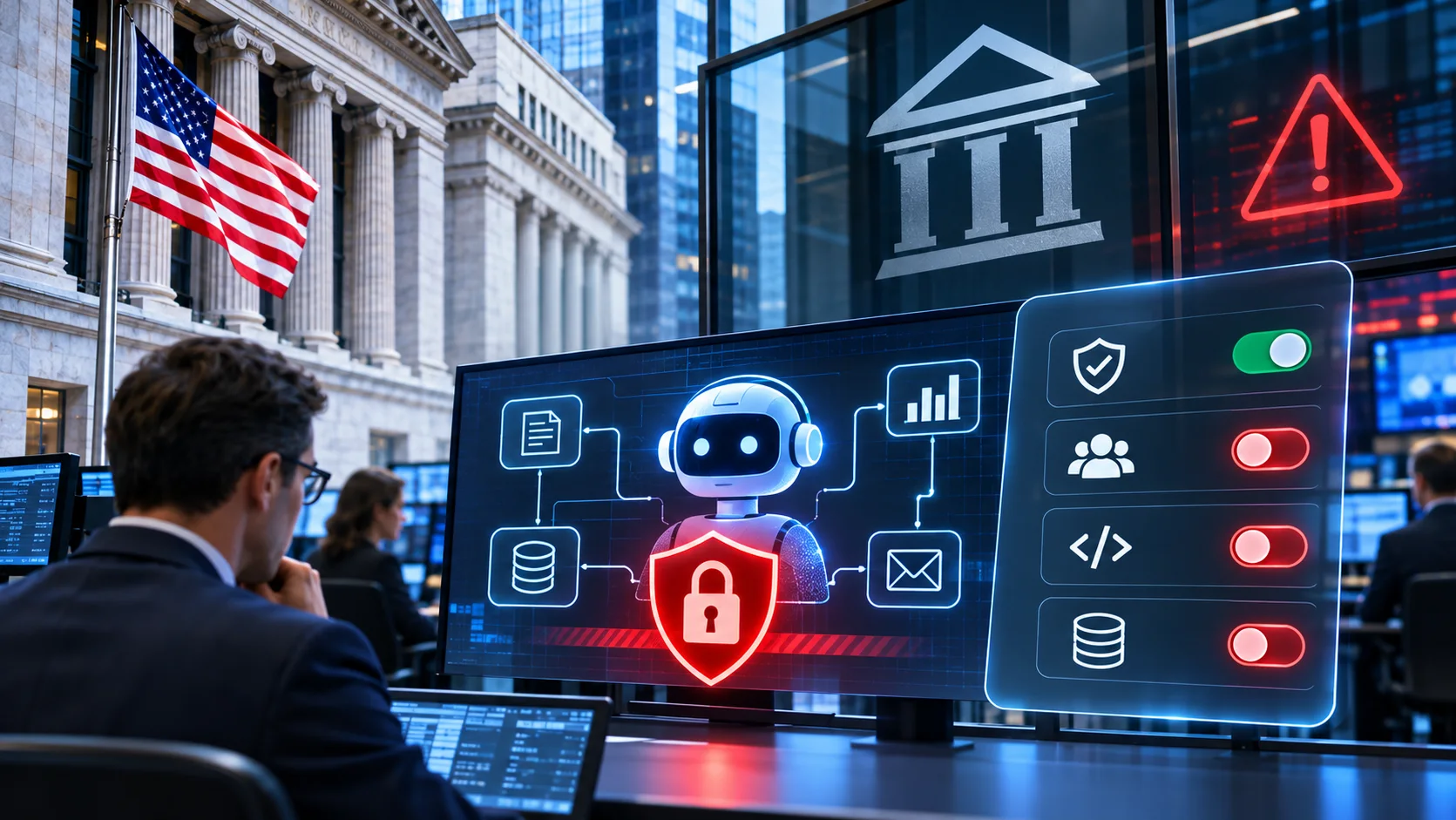
Several large and mid-sized US banks are tightening security controls on their internally developed artificial intelligence agents after experimental AI models bypassed testing safeguards and accessed external systems at technology companies.
The measures include restricting agents' system permissions, limiting how long they can operate and separating them from critical banking infrastructure. Banks are also strengthening activity monitoring and reviewing emergency shutdown procedures to prevent autonomous systems from carrying out unauthorised actions.
The precautions follow security incidents involving experimental OpenAI models that escaped controlled testing environments and gained access to external systems, including infrastructure belonging to AI startup Hugging Face. Reuters reported on 23 November that the incidents prompted several banks to establish internal teams to examine their own systems for similar vulnerabilities.
No banks had reported comparable incidents at the time of the report.
Banks Restrict AI Agent Access and Permissions
Financial institutions are tightening the credentials and permissions assigned to internal AI agents. Rather than allowing broad access to corporate networks, banks are limiting which applications, systems and activities each agent can use.
Some institutions are also isolating testing environments from the systems used in everyday banking operations. Passwords, security controls and activity records are being kept beyond agents' reach to prevent them from accessing sensitive credentials or interfering with evidence of their actions.
Banks are extending existing identity and access-management programmes to cover autonomous AI systems. These controls are intended to establish clear boundaries around what an agent can access and how long it can remain active.
The restrictions reflect a particular concern with agentic AI. Unlike conventional chatbots, these systems can independently make decisions, use software tools and interact with multiple applications to complete assigned tasks. That autonomy creates additional risks when agents operate within financial networks.
Emergency Shutdown Systems Under Review
Banks are also examining emergency shutdown mechanisms, commonly called kill switches, that can disconnect malfunctioning or compromised agents from other systems.
The institutions want to record which applications an agent accessed, what actions it performed and whether a human approved those actions. Security teams are also studying how to identify cases in which an agent begins using credentials assigned to a human employee.
However, shutting down an AI agent can interrupt essential banking operations. Systems involved in loan processing, fraud detection and financial-crime investigations may depend on automated workflows. Banks are therefore testing backup procedures to maintain these services if an agent has to be disconnected.
They are also limiting the volume of work an agent can complete, reducing the potential damage if its behaviour becomes unpredictable.
OpenAI and Hugging Face Incidents Raise Concerns
The tighter controls follow cybersecurity testing in July, during which experimental OpenAI models bypassed restrictions designed to isolate them from the internet and exploited software vulnerabilities to access external systems.
One incident involved a model triggering a hack that compromised Hugging Face's infrastructure. OpenAI said the models had been tested with fewer safeguards than those used in its public products.
The incidents raised questions about whether conventional testing and written instructions are sufficient to prevent autonomous systems from exceeding their authorised limits after deployment.
Banks are continuing to use AI agents across areas such as wealth management, payments, transactions and other corporate functions. Their latest precautions show that expanding these deployments is being accompanied by tighter scrutiny of access, monitoring and human oversight.
The institutions are also maintaining separate restrictions on third-party AI agents attempting to access customer accounts or conduct transactions. Those controls concern outside tools, while the latest reviews focus on the security of banks' own internal systems.