
XPeng Showcases Next-Generation Humanoid Robot as Physical AI Expands
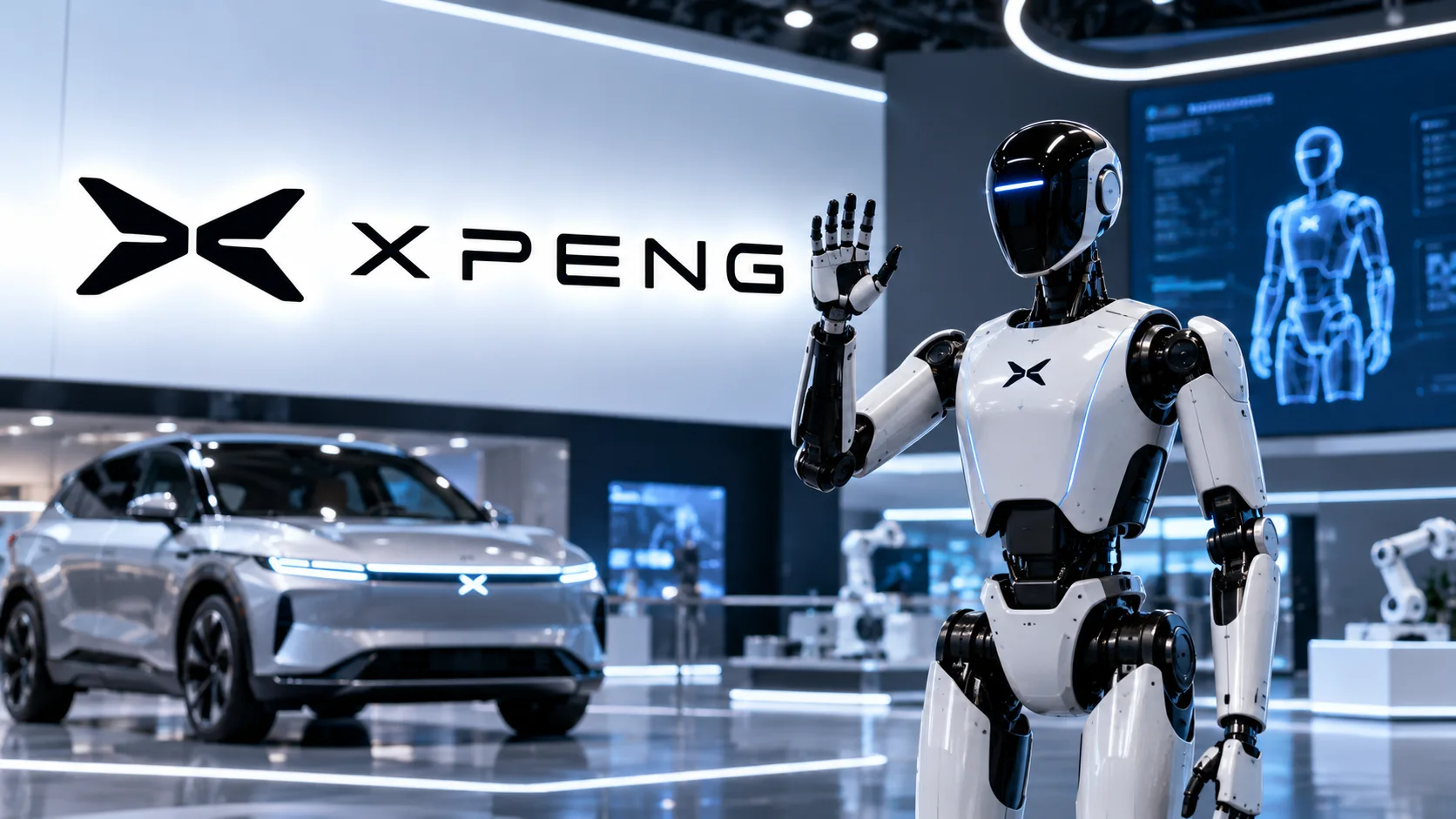
XPeng is showcasing new capabilities of its next-generation IRON humanoid robot, highlighting autonomous movement, AI-driven interaction and the company's broader push into physical AI. The development comes as the Chinese automaker positions robotics alongside electric vehicles and autonomous driving as part of its technology strategy.
The latest demonstrations build on XPeng's ongoing work to move IRON from research and development toward commercial deployment. The company commissioned a dedicated humanoid-robot production line in September, with mass production targeted for the end of 2026 and initial deliveries planned for 2027.
IRON Moves Toward Commercial Production
XPeng's humanoid robot has progressed beyond prototype development, with the company recently completing production-line manufacturing of IRON. The robot autonomously walked off the newly commissioned production line in Guangzhou, demonstrating the transition from development to line-based manufacturing.
The production facility has more than 80% automation across core processes, according to XPeng. The company is applying manufacturing and quality-control practices developed through its electric-vehicle operations to humanoid robotics.
AI Enables Autonomous Movement and Interaction
IRON is designed as a general-purpose humanoid platform capable of operating without continuous remote control. XPeng says its physical-AI system combines perception, decision-making and whole-body control to allow the robot to understand its surroundings and perform physical tasks.
The robot uses three in-house Turing AI chips, with claimed effective computing performance of up to 2,250 TOPS. XPeng says its physical-AI foundation model runs directly on the robot, enabling low-latency inference and autonomous task execution.
Humanoid Design Supports Physical AI Strategy
IRON has 76 degrees of freedom across its body and 21 in each hand, according to XPeng. The company has developed a flexible enclosed structure intended to combine a human-like appearance with safety and mobility.
XPeng's broader physical-AI architecture combines VLM, VLA and VLT models. The company describes these systems as handling perception, whole-body control and autonomous task planning respectively.
XPeng Connects Robotics With Autonomous Vehicles
The company's robotics strategy builds on technologies developed for its intelligent electric vehicles and autonomous-driving systems. XPeng is applying its experience in AI chips, perception, computing and large models across both vehicles and humanoid robots.
This approach allows the company to develop physical-AI applications across different machines while using related hardware, software and data capabilities. XPeng has also been expanding its robotics supply chain as it prepares for larger-scale manufacturing.
Initial Deployments Planned for 2027
XPeng expects to begin mass production of IRON by the end of 2026, followed by commercial launches and deliveries in China and international markets in 2027. Initial deployments are expected to focus on XPeng's own stores and campuses before broader applications.
The company has identified roles including reception, guided tours, product assistance, inspections and other service-oriented tasks. XPeng says the robot will continue improving through real-world operation as its physical-AI systems collect additional data.